
Law firm local SEO: how GBP entity signals, schema and PageSpeed decide who gets the call
The firm with the better attorneys loses to the firm that looks safer on a phone screen at 1 a.m. Here is how to make Google, the AI engines and the injured person in the parking garage reach the same conclusion about your firm.
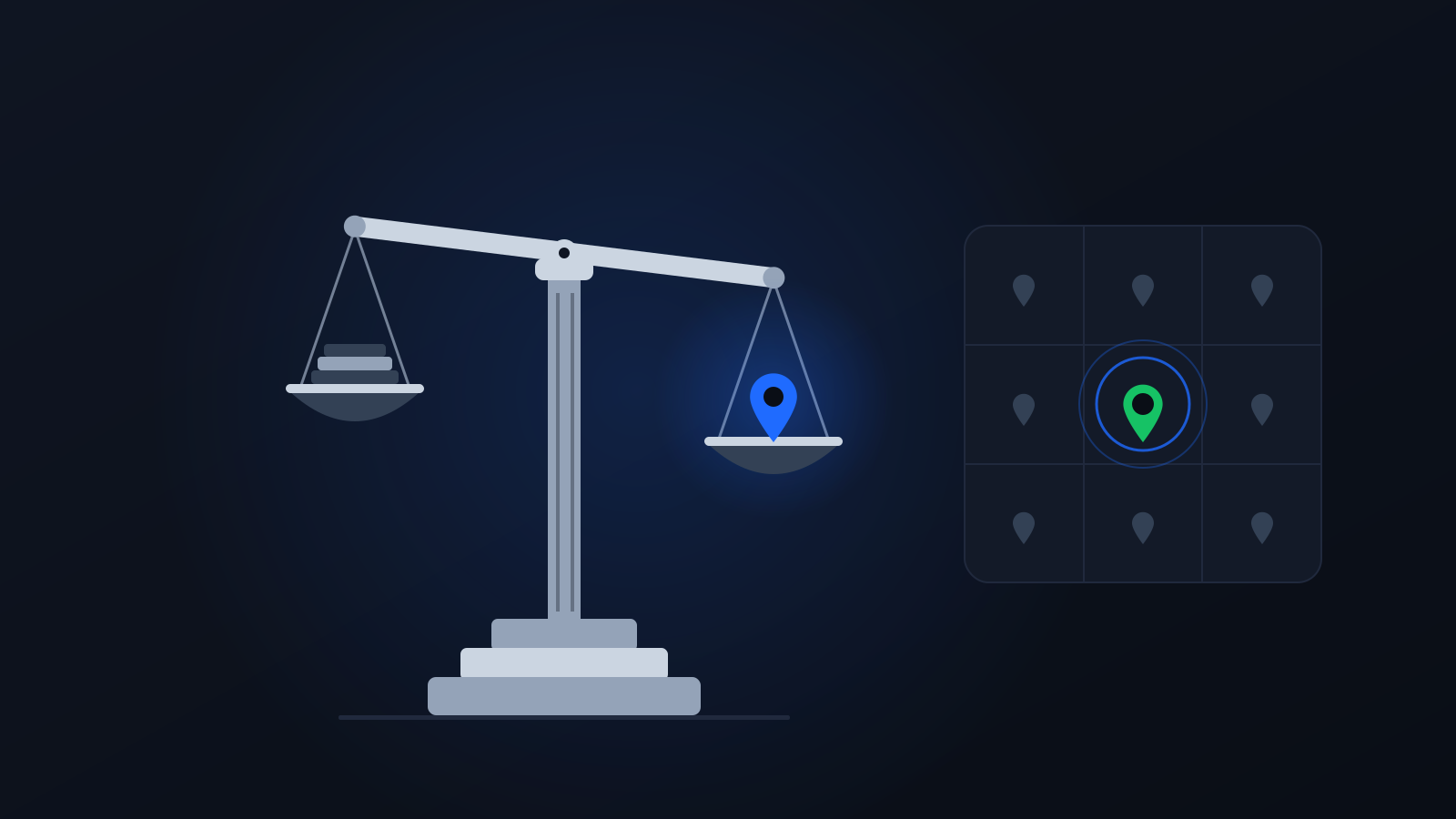
The search that happens before anyone reads your bio
It is 1 a.m. in a hospital parking garage in Henderson. A woman has just been discharged with a neck brace after a rear-end crash on the 215, and the other driver's insurer has already left a voicemail. She types car accident lawyer near me with one thumb. She reads no biographies. She compares three Map Pack results and two star ratings, taps the site that loads before the elevator arrives, sees a phone number and a line that says no fee unless we win, and calls.
The firm she did not call may have the better trial record. Google judged relevance, distance and prominence in milliseconds, she judged safety in eight seconds, and both judgments came from the same raw material: how completely and consistently the firm describes itself across Google Business Profile, its website, its schema, its reviews and the places other people talk about it. Most firms treat those as separate vendors' problems. This article is about owning the connection.
The short version for a managing partner
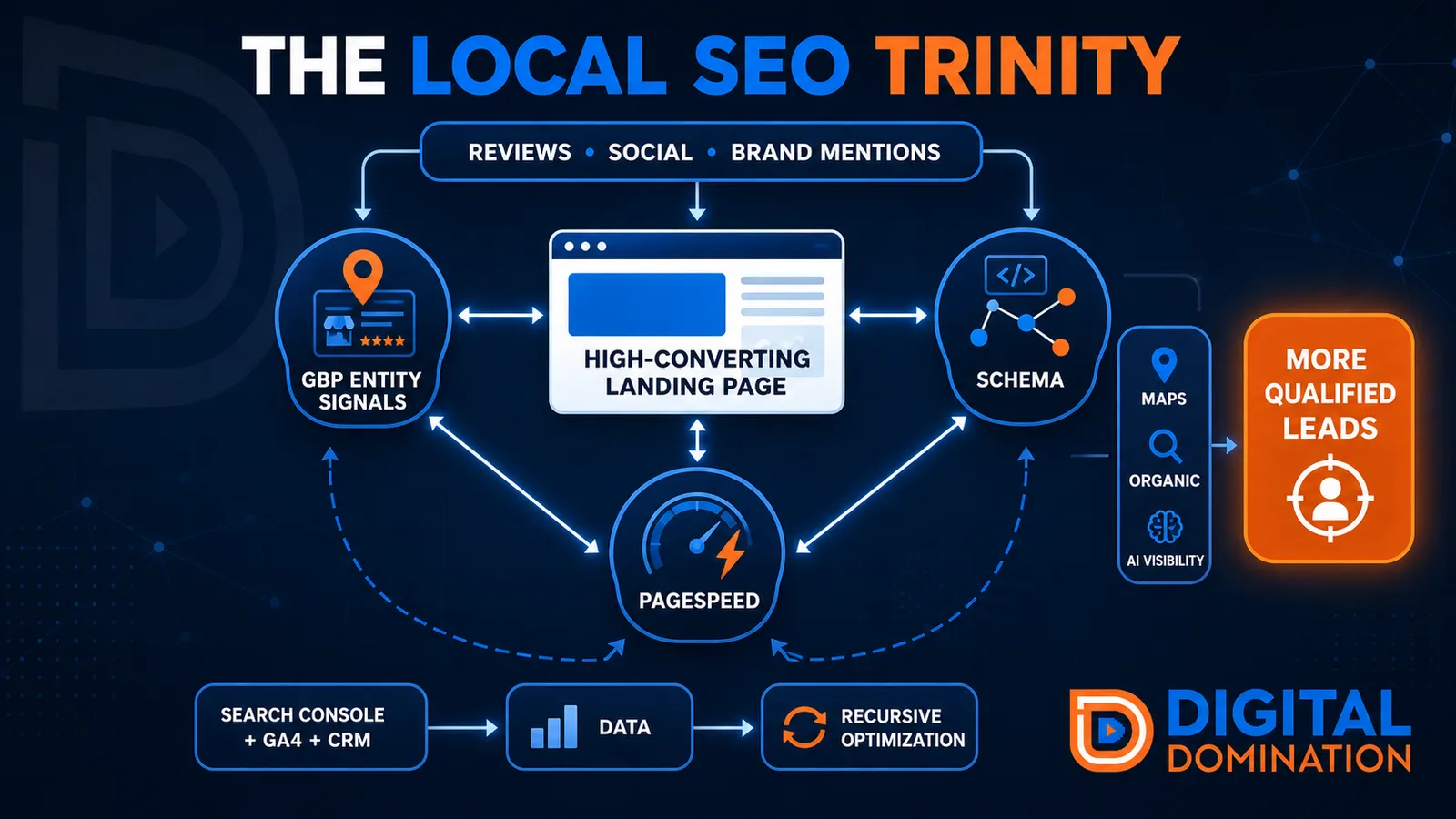
At Digital Domination we describe the foundation as a trinity, with everything else in the firm's marketing either feeding it or measuring it:
- ▸Google Business Profile entity signals tell Google who the firm is, which matters it handles and which counties it serves. This gets you into the Map Pack.
- ▸Schema connects the firm, each attorney, each office, bar admissions, practice areas and fees into one machine-readable graph, so Google and the LLMs describe you accurately instead of guessing.
- ▸PageSpeed makes the phone number, the fee promise and the attorney's face usable within two seconds on a mid-range phone, so the lead does not bounce to the next result.
- ▸Around them sit a landing page built to convert, review velocity, social and brand mentions, and a Search Console to GA4 to CRM loop that shows which of it produces signed cases.
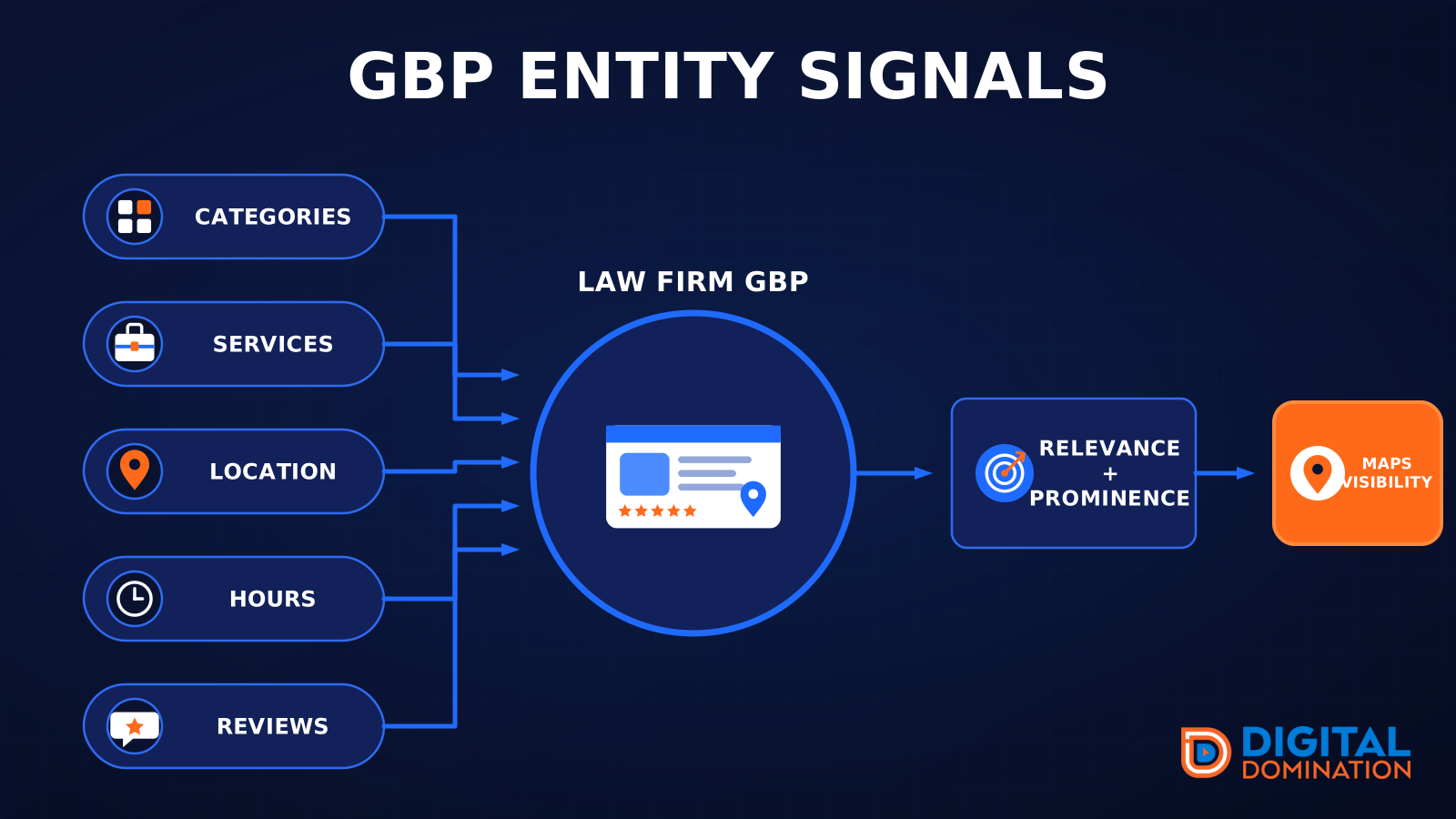
GBP entity signals for a law firm
Google describes local ranking in terms of relevance, distance and prominence. You cannot move the office, so the fight is relevance and prominence, and the profile is where relevance starts.
The primary category is the decision most often botched. A firm that picks Law firm as its primary when it lives on car crashes tells Google it is a generalist. Personal injury attorney, Criminal justice attorney, Family law attorney and Estate planning attorney serve distinct intent. Pick the primary that matches the matter you most want the phone to ring for.
Services carry the practice-area vocabulary: car accidents, motorcycle accidents, truck crashes, rideshare claims, premises liability, wrongful death. Each phrase must also appear as a heading on the matching website page, or the entity link is broken. Then audit every office profile for:
- ▸Business name exactly as it appears on the State Bar record, with no practice-area keywords added. Stuffing gets reported and suspended.
- ▸A physical office a client can visit. Virtual offices and mail drops are the top reason law firm profiles are suspended.
- ▸A local phone number that rings intake and matches the site footer and schema, with hours that reflect when intake answers.
- ▸Practitioner profiles for each named attorney, linked to that attorney's biography page, carrying the attorney's own reviews.
- ▸Photos of the real office exterior, reception and attorneys, refreshed quarterly. Stock gavels are noise.
- ▸A website link to that office's dedicated location page with UTM parameters, never the homepage.
Authority proof a prospect can verify
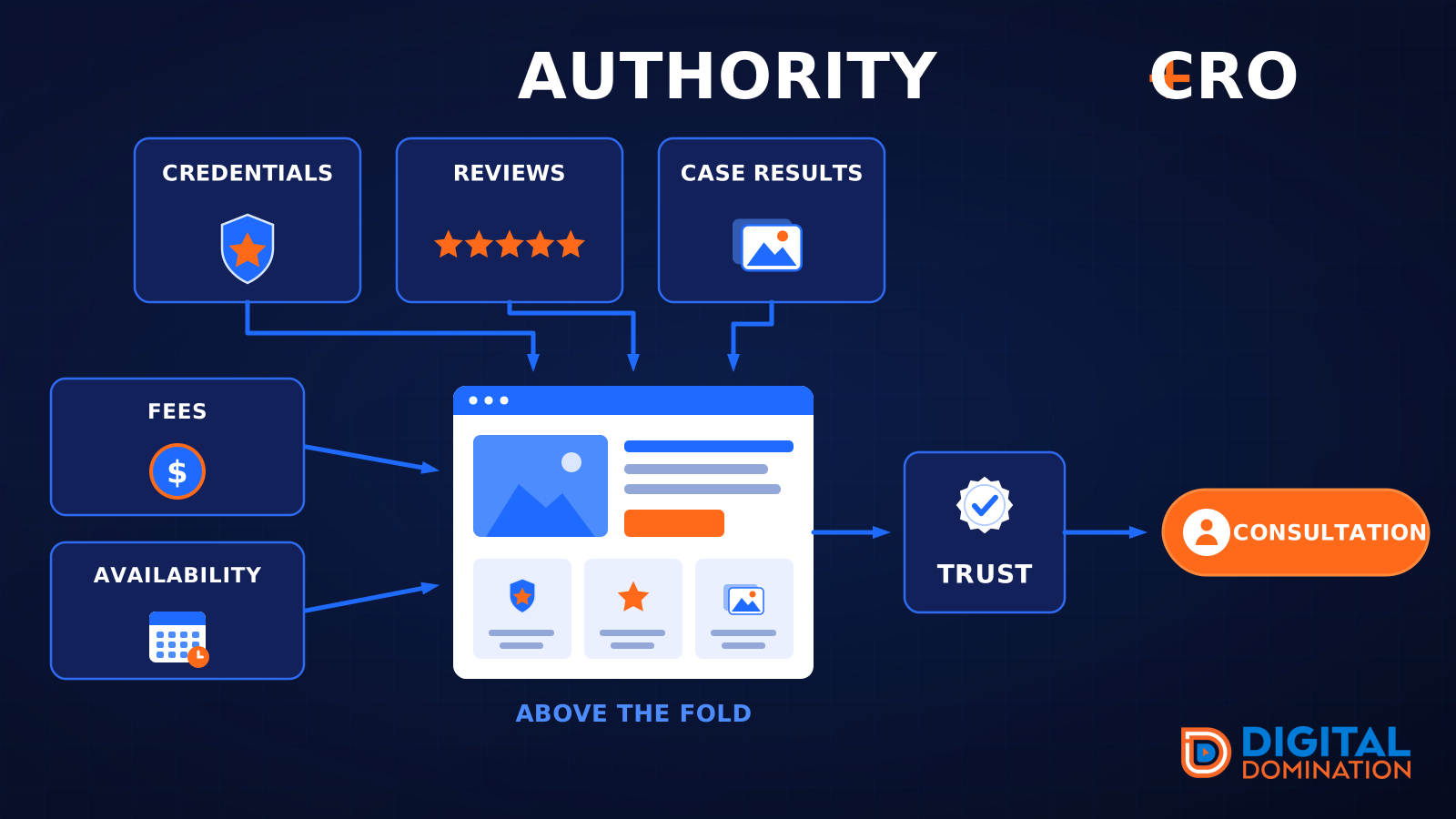
A person choosing a lawyer asks two questions at once: can this firm handle my specific problem, and can I trust these people with the outcome. The first screen has to answer both with claims a skeptical person or an AI system can check.
An authority strip for a Las Vegas injury firm might read: Licensed in Nevada since 2009, 4.9 stars on Google, Board certified in civil trial law, Free consultation. Those figures are placeholders for illustration only. The point is that each item links to its source: the State Bar attorney search, the Google reviews tab, the certifying board.
Attorney biography pages carry the credential weight, and most firm sites treat them as an afterthought. Each should include:
- ▸State Bar number and admission year, linked to the bar's official profile, plus every court admission.
- ▸Law school and degree with years, board certifications with the certifying body named, and bar association leadership roles.
- ▸Awards with year and organization. Super Lawyers, Best Lawyers, Martindale-Hubbell and Avvo ratings are the ones prospects recognize.
- ▸Representative matters as short case studies (problem, strategy, result) with client permission and the disclaimer your bar's advertising rules require.
- ▸Links to Avvo, Justia, Martindale-Hubbell and LinkedIn, consistent in name and firm affiliation.
Review velocity and what a good legal review says
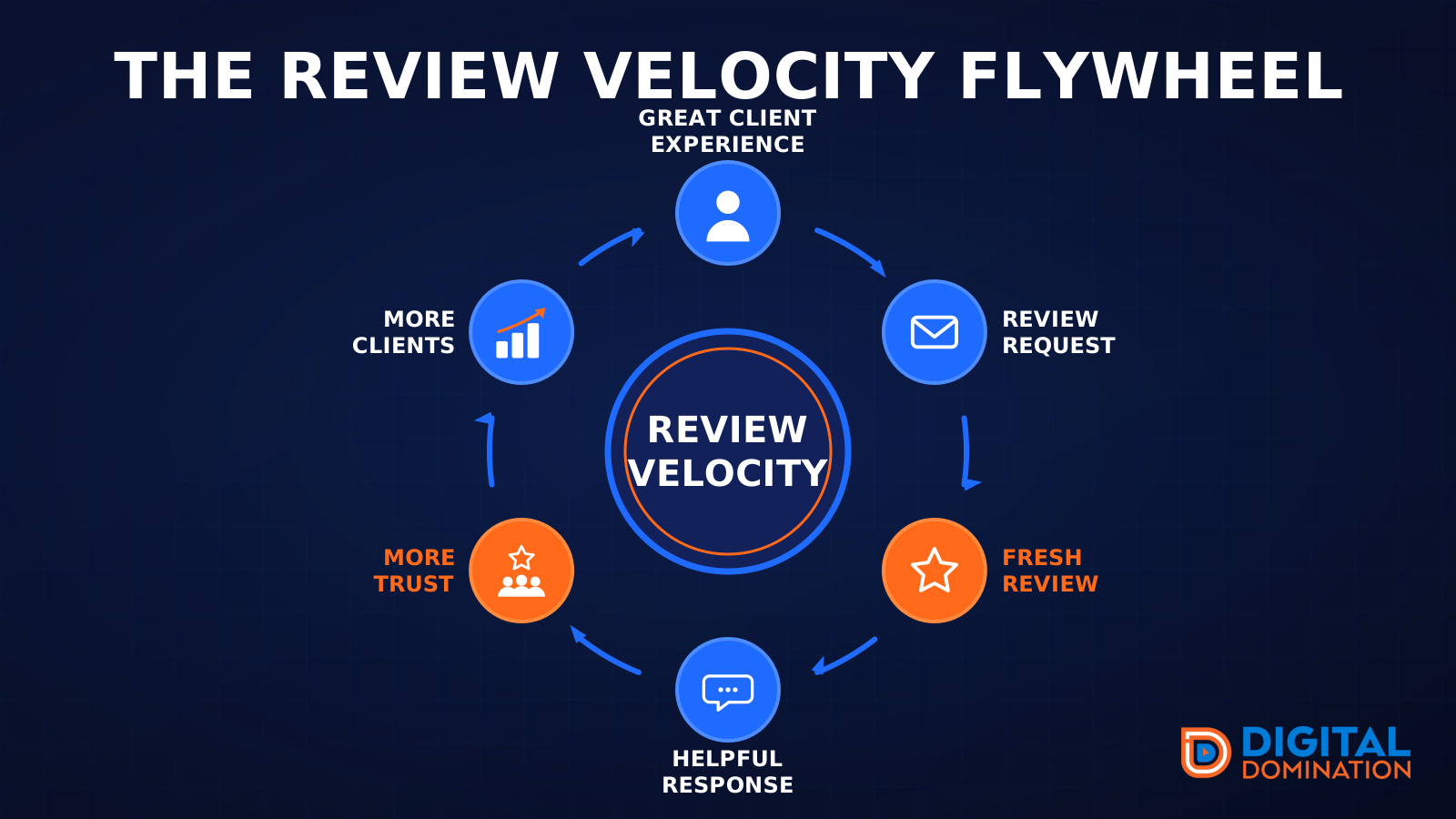
A firm with 400 reviews and nothing new since last winter looks less alive than a firm earning two a week. Velocity matters alongside the star average, and so does the text.
Legal clients often cannot describe the outcome and may not want to. What they can describe is the experience, and that language is what Google and the LLMs use to learn what the firm is known for. The best reviews name the attorney, the matter type and the city, and describe behavior: called me back the same day, explained the settlement offer in plain English, took my case after two other firms passed.
Build the ask into the matter lifecycle: case resolution, the settlement disbursement meeting, a favorable ruling, always with a reminder not to disclose confidential details. Reply to every review without confirming the reviewer was a client, because confidentiality applies in a public response too.
Schema architecture for a multi-attorney firm
Schema is JSON-LD that labels what the page already says, so Google can read that Example Law Group is a LegalService, that Jane Example is a Person who works for it and holds a Nevada bar number, and that the firm offers motorcycle accident representation across Clark County.
Most firms we audit have no schema or a WordPress plugin default that marks the homepage as an Organization and stops. That does not model six attorneys, two offices and twelve practice areas. The map by page type:
- ▸The firm: LegalService, with telephone, address, openingHours, priceRange and sameAs pointing to the State Bar, Avvo, Justia and LinkedIn.
- ▸Each office: a distinct LegalService location node with its own address, geo and telephone, tied to the firm with parentOrganization.
- ▸Each attorney: Person, with worksFor, alumniOf, hasCredential (an EducationalOccupationalCredential per bar admission), identifier as a PropertyValue holding the bar number, knowsAbout for practice areas, and sameAs to the bar profile.
- ▸Each practice area: Service, with provider pointing to the firm, areaServed listing cities and counties, and an Offer or PriceSpecification carrying the fee language as it appears on the page.
- ▸Case results: Article with author pointing to the attorney's Person node and about pointing to the Service. WebPage and BreadcrumbList everywhere.
- ▸The glue: a permanent @id for the firm, each office, each attorney and each service (the attorney URL followed by #person) so every page references one node instead of spawning duplicates.
PageSpeed on the sites law firms actually run
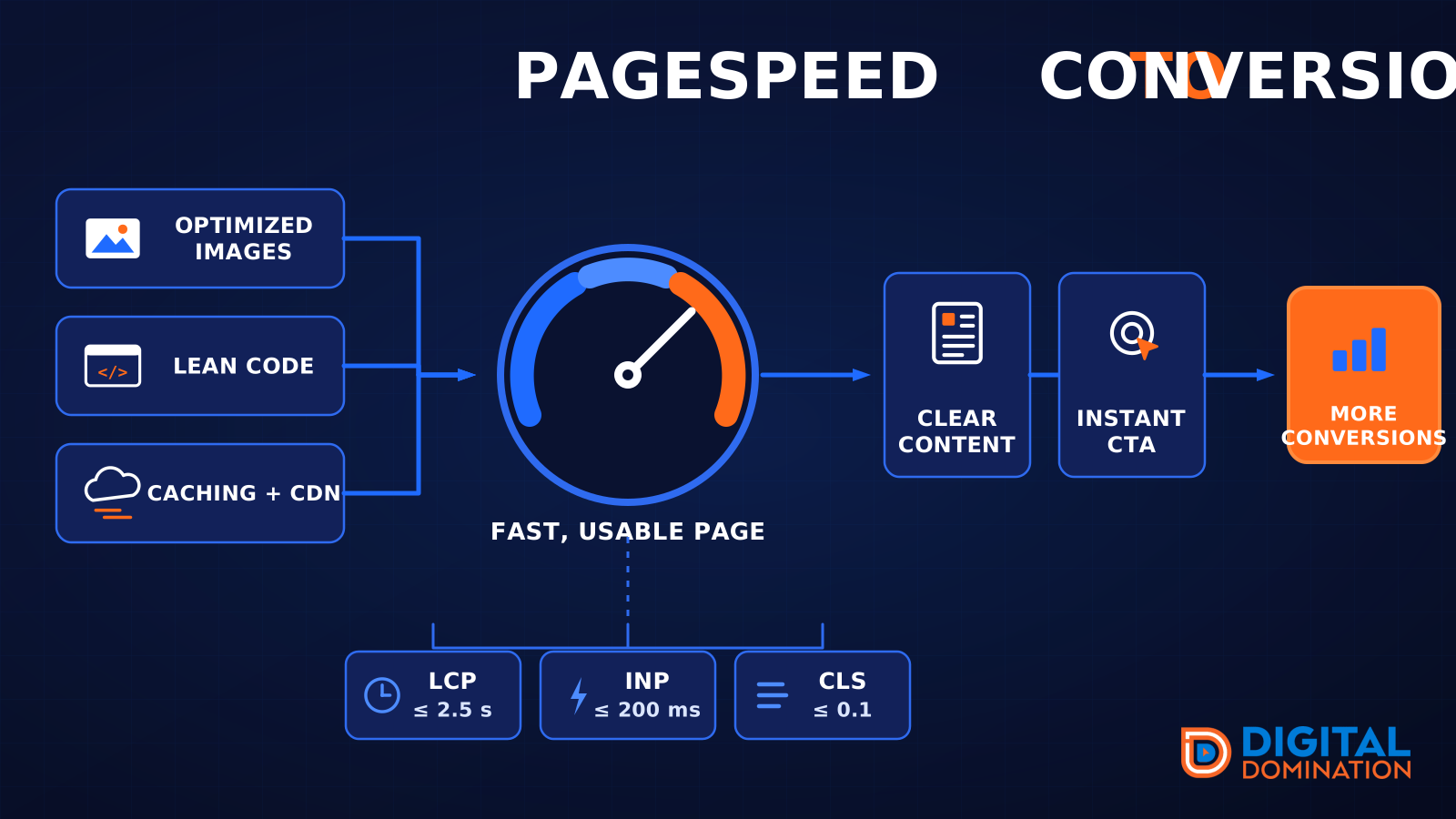
Law firm websites have a recognizable weight problem: a skyline hero video, an intake chat widget, a call tracking script, a pop-up asking do you have a case, Tag Manager with fourteen tags, and an Elementor or Divi theme under it all. On an office desktop it feels fine. On a phone in a garage it takes six seconds to show a phone number.
Google's good thresholds for Core Web Vitals are a Largest Contentful Paint of 2.5 seconds, an Interaction to Next Paint of 200 milliseconds and a Cumulative Layout Shift of 0.1, measured at the 75th percentile of field data. At Digital Domination we build to a PageSpeed Insights performance score of 90 or higher and a 2/2 on the agentic browsing check, because an AI agent asked to find a lawyer hits the same wall a human does. The fixes that matter most:
- ▸Replace the autoplay hero video with a preloaded WebP still that is never lazy-loaded. The video can live below the fold as click-to-play.
- ▸Delay the chat widget and call tracking script until first interaction, and confirm the tracking number still swaps.
- ▸Reserve fixed dimensions for the review widget, the consultation form and the sticky call bar so nothing shifts under the visitor's thumb.
- ▸Remove every Tag Manager tag nobody can name the owner of. Self-host and subset fonts.
- ▸Cut unused page-builder CSS and JavaScript, add a CDN and full-page caching, and check server response time, because cheap legal-marketing hosting is a frequent culprit.
Fee language that AI Overviews and LLMs can quote
When someone asks an AI engine whether a lawyer offers a free consultation or works on contingency, it answers from whatever fee language it can find and trust. Firms that say nothing about money get described vaguely or skipped. Bar rules in most states allow truthful fee information, and contingency disclosures usually must say who pays costs. Publish the fee model on the practice-area page, the FAQ and the GBP services, and mirror it in the Offer schema:
- ▸Free initial consultation, in person, by phone or by video.
- ▸Injury cases on a contingency fee: no attorney fee unless we recover money for you, with a note on how case costs are handled.
- ▸Criminal defense and DUI matters as a flat fee by charge level, with a starting figure if the firm is comfortable publishing one.
- ▸Family law and business litigation billed hourly within a stated range, with the retainer explained.
- ▸Estate planning as flat fees by document set, plus payment plans and the variables that change the final cost.
Content that follows the client from crash to signed retainer
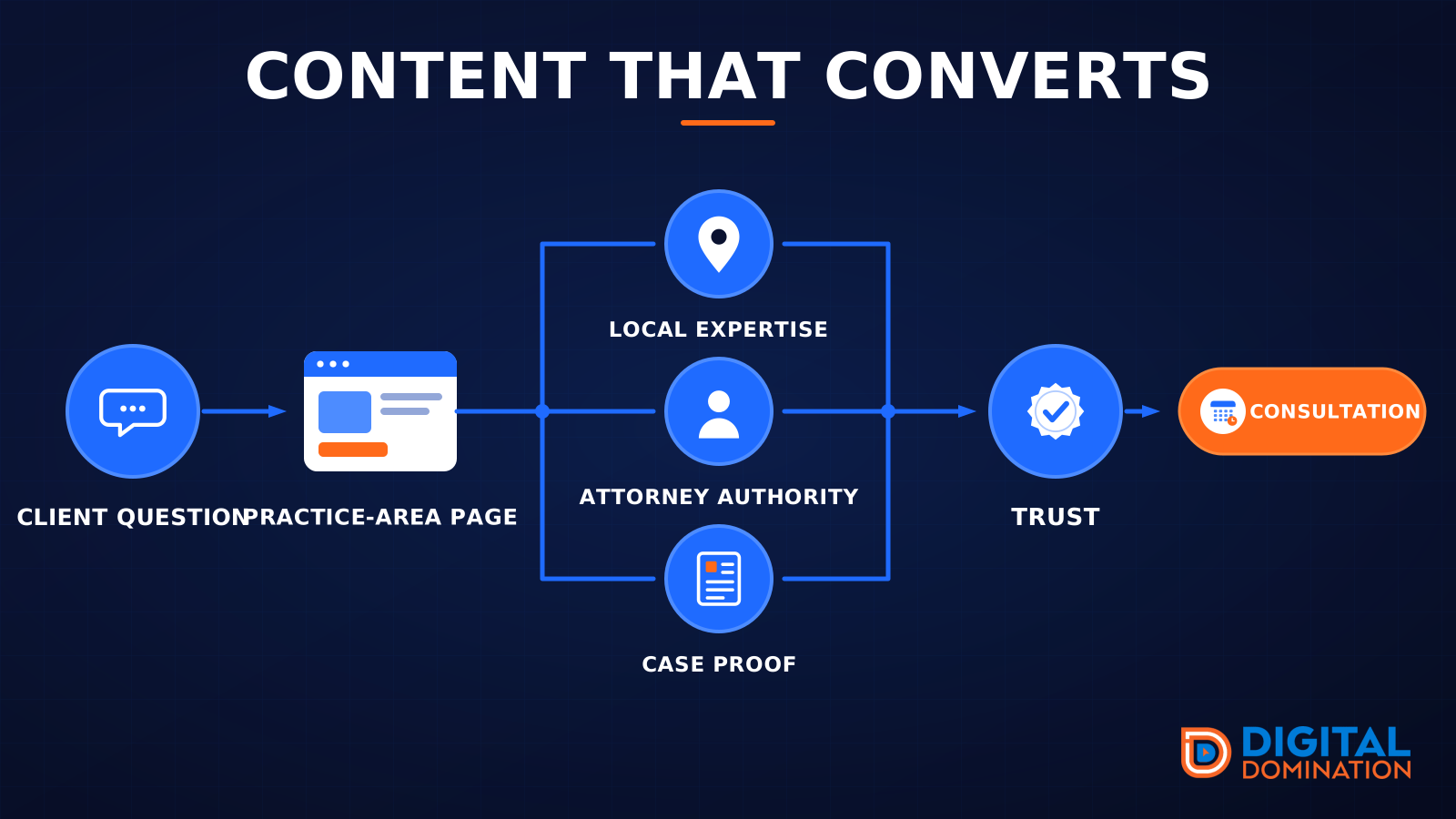
A practice-area page that reads like a brochure loses to one that reads like a knowledgeable friend. The woman in the garage has a sequence of questions, and the page should answer them in her order: do I have a case, what should I do tonight, what deadlines apply, what could this be worth, what does it cost, who will handle it, and what happens at the consultation.
Local relevance for a law firm is jurisdictional. A Las Vegas injury page should discuss Nevada's comparative negligence rule, the statute of limitations that applies, Clark County District Court and the insurers the firm sees most often, not a national article with the city name swapped in. Every page carries a named attorney author, published and updated dates, statute citations, and internal links to the attorney bio, the office page, case results and the fee FAQ, so the page mirrors the schema underneath it.
The loop: Search Console, GA4, call tracking and the case management system
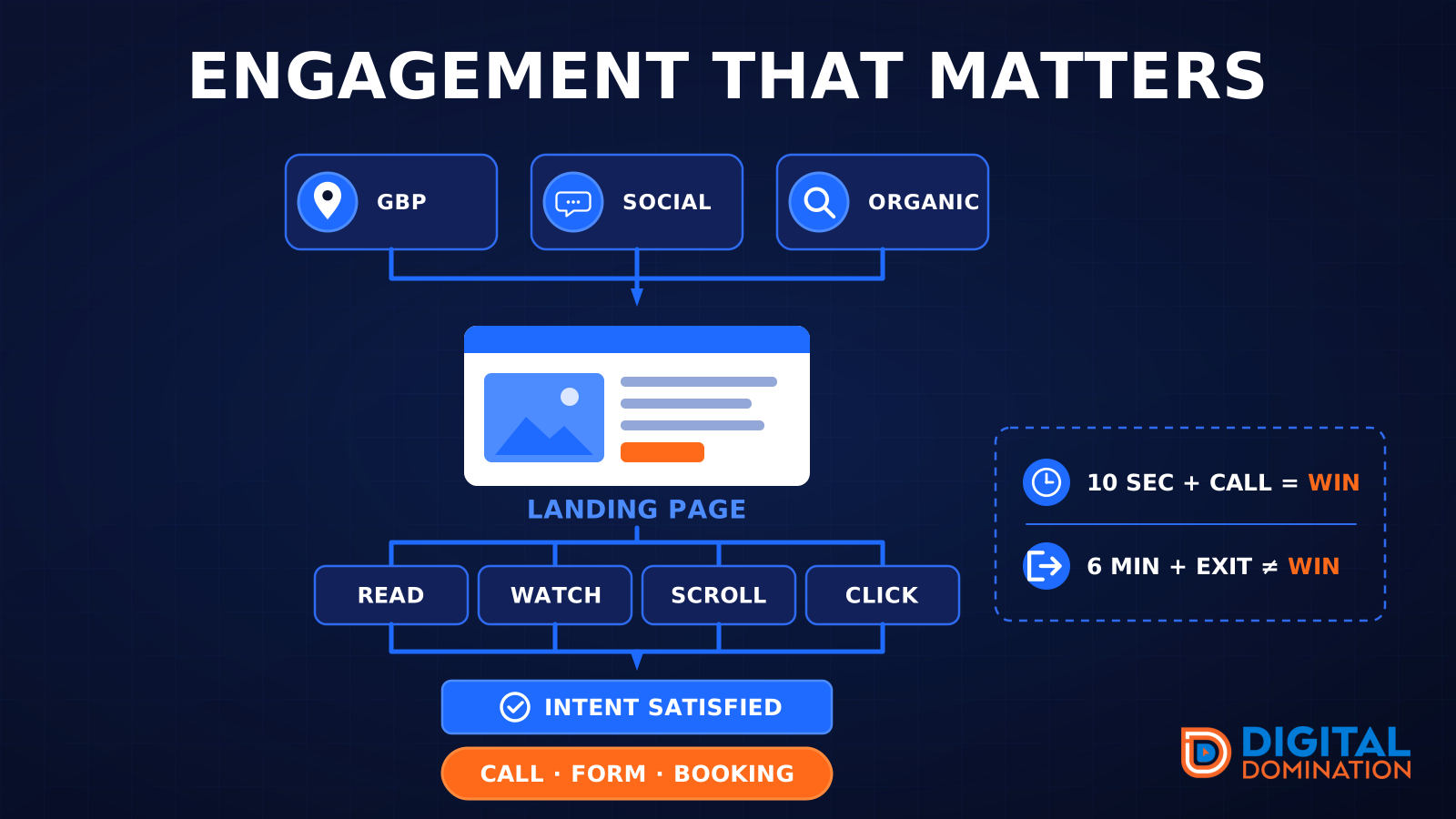
Search Console and GA4 rank nothing. They turn SEO into a loop. Search Console shows which queries a page earns impressions for, its position and click-through rate. GA4 shows what happened after the click: call taps, form completions and which pages produce contact events. The intake CRM or case management system (Clio, Lawmatics, Filevine, Litify) records which leads signed and what the cases were worth. Read together, each gap points to a fix:
- ▸High impressions, low clicks for truck accident lawyer Henderson: rewrite the title and meta, put the phrase in the H1, and check that the office profile links to that page.
- ▸High clicks, few calls: test speed on a real phone, check the fee promise and attorney photo above the fold, and look for a form that breaks on mobile.
- ▸Plenty of calls, few signed cases: the page attracts the wrong matter types or geography, or intake is dropping qualified callers. Fix the qualifiers or the intake script, not the SEO.
- ▸A page suddenly earning impressions for a question it does not answer: build that question into an FAQ or a new page.
Social posting, Reddit and brand mentions as corroboration
Social content works best as distribution for the entities the site and profile already describe. A sixty-second video from a named attorney on what to do after a rideshare crash in Las Vegas, posted to YouTube, Instagram, TikTok and as a GBP update, sends people back to the practice-area page, and its engagement shows which topics deserve a full page. Google now reports supported social and video platform properties inside Search Console, a sign the two kinds of discovery are converging.
Brand mentions do not need a link. A Las Vegas subreddit comment that says I used Example Law after my motorcycle wreck and Jane called me back every time connects the firm, the attorney, the matter type, the city and a service quality in one sentence. Axios reported in August 2026 that Reddit's share of visible ChatGPT Search citations fell roughly 86 percent, but OpenAI still holds a Reddit data partnership, and citation selection, retrieval and training are separate processes. The durable move is diversification: State Bar profile, Avvo, Justia, Martindale-Hubbell, local news and podcasts, all carrying the same firm name, attorney names, addresses and phone numbers.
A 90-day plan for the firm
Order matters. Fix the entity and the page before spending on content or reviews, because content pointed at a broken foundation wastes money. The four phases:
- ▸Days 1-14, baseline: GeoGrid scan per practice area, audit of every office and practitioner profile, benchmark of rankings, calls and signed cases, PageSpeed Insights on the top pages, credential inventory, schema dump, NAP check across the bar directory and Avvo, and GA4 call and form events plus CRM source tracking.
- ▸Days 15-30, repair: fix categories and services, build a page per office, rewrite the above-the-fold proof strip and CTA, publish attorney biographies and fee language, deploy the LegalService, Person, Service and Offer graph with permanent @id values, and clear the biggest PageSpeed problems.
- ▸Days 31-60, expand: publish practice-area pages that follow the client's question sequence, write case results with the required disclaimers, launch the review request at case resolution, and distribute attorney videos through GBP and social.
- ▸Days 61-90, optimize: pull high-impression, low-click queries from Search Console, high-traffic, low-call pages from GA4 and low-conversion sources from the CRM, fix the largest gap first, re-run Core Web Vitals and the GeoGrid scan, then repeat.
One firm, one entity, checked from every point on the map
Nothing here works alone. A perfect profile pointing at a slow homepage loses. Schema describing attorneys whose bar profiles list a different firm name confuses more than it helps. A fast site with no reviews and no fee language gets skipped. The goal is one clearly defined legal entity whose attorneys, admissions, practice areas, offices, fees and reputation say the same thing everywhere Google and the AI engines look, plus a monthly loop that makes it more relevant and prominent than it was.
At Digital Domination this is the system behind our guarantee: top 3 in the Google Map Pack in 12 weeks or you do not pay. The place to start is not another homepage audit. It is seeing where the firm ranks across the whole market. The free GeoGrid scan checks 169 points across your city, so you can see whether the woman in the Henderson garage would have found you at all, and where to work first.
Keep reading
Related guides
- ▸Electrician local SEO
- ▸Estate planning attorney local SEO
- ▸Fake Google Maps Listings Hijack Addresses
Put it into action
Frequently Asked Questions
Should each attorney have their own Google Business Profile?
Google allows practitioner profiles for public-facing professionals such as attorneys, so a named attorney who meets clients at the office can have one. Each should use the attorney's name only, link to that attorney's biography page rather than the homepage, and carry its own reviews. Do not create them for attorneys who never meet clients, and never for staff.
Can a law firm publish case results and testimonials without violating bar advertising rules?
In most states, yes, as long as the results are truthful, not misleading, and carry the disclaimers the bar requires, typically that past results do not guarantee a similar outcome. Some states restrict testimonials or mandate specific language, so review the marketing against the applicable rules of professional conduct. Client permission is required for anything that identifies a client or matter.
Does schema by itself improve a law firm's rankings?
No. Schema is not a direct ranking boost. It helps search engines and AI systems understand the firm, its attorneys, its services and their relationships, and it can make pages eligible for supported search features. It is most valuable when it accurately describes strong visible content and links every page to the same permanent entity nodes.
What PageSpeed score should a law firm website target?
Aim for a PageSpeed Insights performance score of 90 or higher on the pages that matter most, and pass Core Web Vitals in field data: LCP 2.5 seconds, INP 200 milliseconds and CLS 0.1 at the 75th percentile. At Digital Domination we also require a 2/2 on the agentic browsing check, because AI agents asked to find a lawyer stall on the same heavy pages people do.
Should law firms publish fees on their website and Google Business Profile?
Yes, as far as the firm can do so accurately. Free consultation, contingency terms, flat fees by charge level and hourly ranges are publishable in most states, subject to the truthful and not misleading standard and any required cost disclosures. Clear fee language is also what AI Overviews and LLMs quote when a searcher asks what a lawyer costs.
How should a law firm ask for reviews without breaching confidentiality?
Ask at natural milestones such as case resolution or the settlement disbursement meeting, and tell the client they can describe the experience without disclosing case details. When replying, thank the reviewer without confirming they were a client or discussing the matter, since confidentiality applies to public responses. Never offer anything of value for a review.
Do social media posts help a law firm rank in Google Maps?
Not directly. Google has not confirmed that likes or followers move local rankings. Social posting helps indirectly through branded searches, referral visits, video discovery, mentions and reviews, and Search Console now reports supported social and video platform properties, so the two channels are increasingly measured together.
Is Reddit still worth a law firm's attention for AI visibility?
Yes, as part of a diversified footprint rather than the whole plan. Visible ChatGPT citations of Reddit fell sharply in August 2026, but citation selection is not the same as retrieval or training, and OpenAI still has a Reddit data partnership. Genuine community discussion of the firm remains useful context for search engines, AI systems and prospective clients.
Ready to dominate your map?
Top 3 in the Google Map Pack in 12 weeks, or you don't pay.