
Google adds EEA things-to-do searches to EEA aggregator and supplier units
Tour operators, attractions, venues and activity businesses that depend on European travelers need to watch how Google is presenting booking options, not just where their website ranks.
What changed and who it hits
Google updated its Search Central documentation on November 9 to say its EEA-only aggregator unit and supplier unit now support “things to do” queries. In plain English, some Google Search results in the European Economic Area can show a dedicated unit for booking platforms that sell tours, attractions and activities. When that aggregator unit appears, a companion supplier unit may also show direct providers.
PPC Land reported the change on November 12, describing how tour aggregators can gain a Google Search unit for EEA things-to-do queries. Search Engine Roundtable also noted the documentation update in its Daily Search Forum Recap on November 9. For a local attraction, tour company, museum, escape room, boat charter, walking tour or activity venue, the issue is simple: the first visible booking path in Google may not be your own website.
Why this matters for direct bookings
If your business depends on travelers from Europe, this update is not just a technical SEO footnote. A traveler searching for a tour or attraction may see an aggregator-style booking unit before they reach normal organic listings. That can make approved intermediaries more visible at the exact moment the customer is ready to choose.
Aggregators can be useful partners. They bring distribution, trust and payment flow. The risk is letting them become the only easy path from Google to your calendar. If customers can find an aggregator listing faster than your own direct-booking page, your margin, messaging and customer relationship may be shaped by someone else.
Owners should pay close attention to these possible pressure points:
- ▸More clicks may go to booking platforms before users see your site.
- ▸Customers may compare your offer beside competitors in the same unit.
- ▸Your direct page has to be crawlable, clear and complete to compete.
- ▸Your local presence still matters when travelers search by place, activity or brand.
- ▸Your SEO provider should be checking actual EEA result layouts, not only ranking reports.
What Google’s documentation says
Google Search Central’s latest documentation updates page says the EEA aggregator unit and supplier unit now support things-to-do queries. The important detail is the regional scope. This is tied to the European Economic Area, so a business in the United States can still be affected if European travelers are part of its demand.
This does not mean every tour or attraction search will look the same. It also does not mean every local business gets a supplier placement automatically. Google’s own local ranking systems still look at relevance, distance and prominence in local contexts. For travel and activity searches, the page quality, structured business information, brand strength and booking clarity around your own site can still influence how well you compete across Google surfaces.
The owner-level takeaway is to stop thinking of this as one blue link ranking. You need to know what a real traveler sees when they search from the region you care about.
How the aggregator unit can change click behavior
When Google creates a special unit for a category, it changes the shape of the search result. Users often interact with the most useful visible element first. If that element is a booking unit featuring aggregators, the customer may never scroll far enough to compare your direct page.
That matters most for businesses where the searcher is close to booking. A person searching for “food tour in Rome,” “museum tickets near me,” “kayak tour in Lisbon” or “things to do with kids in Amsterdam” is often choosing between options quickly. If your direct page is slow, thin, confusing or hidden behind a poor booking flow, the aggregator may feel easier.
Look at your own booking path through the eyes of a traveler who has never heard of you:
- ▸Can they see the activity, price range, location and availability quickly?
- ▸Is the cancellation policy easy to find?
- ▸Is the booking button visible without hunting?
- ▸Does the page answer common questions before checkout?
- ▸Does the page work smoothly on a phone?
Five things to check on your profile this week
This update is about Search units, but your Google Business Profile still affects trust and discovery for local travel intent. Travelers often bounce between Search, Maps, reviews and your website before they book. If your profile is neglected, aggregators can look more complete than you do.
Check these items this week:
- ▸Primary category: Make sure the main category matches what customers actually book, such as tour operator, tourist attraction, museum or event venue.
- ▸Services or offerings: Add clear service names that match your real tours, tickets, activities or experiences.
- ▸Photos: Upload current images that show the experience, entrance, meeting point and what guests should expect.
- ▸Booking link: Send users to the most relevant direct-booking page, not just the homepage.
- ▸Description and attributes: Remove vague wording and add details that help travelers choose, such as family-friendly access, private tours or accessibility information.
Your direct-booking page needs to be complete
If Google gives more visibility to aggregators for things-to-do searches, your direct page has to work harder. A local business owner does not need to become a developer to fix the basics. You need a page that a search engine can crawl and a traveler can understand.
Many activity businesses hurt themselves with booking widgets that hide key details, PDFs that are hard to crawl or pages that use the same thin copy as every reseller listing. Your direct page should have unique content that explains why someone should book with you directly. It should also make practical details obvious before the user clicks into checkout.
Audit one important activity page first and make sure it includes the basics:
- ▸A specific page title that names the activity and location.
- ▸Original description of the experience, not copied reseller text.
- ▸Clear meeting point, duration, schedule and age or safety limits.
- ▸Direct booking button near the top and again after key details.
- ▸Frequently asked questions that handle real buying objections.
- ▸Internal links from your homepage, location pages and related activity pages.
Technical cleanup still affects bookings
This news is about Google’s Search presentation, but technical cleanup still matters. If your site is slow, confusing or difficult for Google to crawl, you make aggregators look safer by comparison. A customer who waits too long or lands on a broken mobile layout will often choose the easiest alternative.
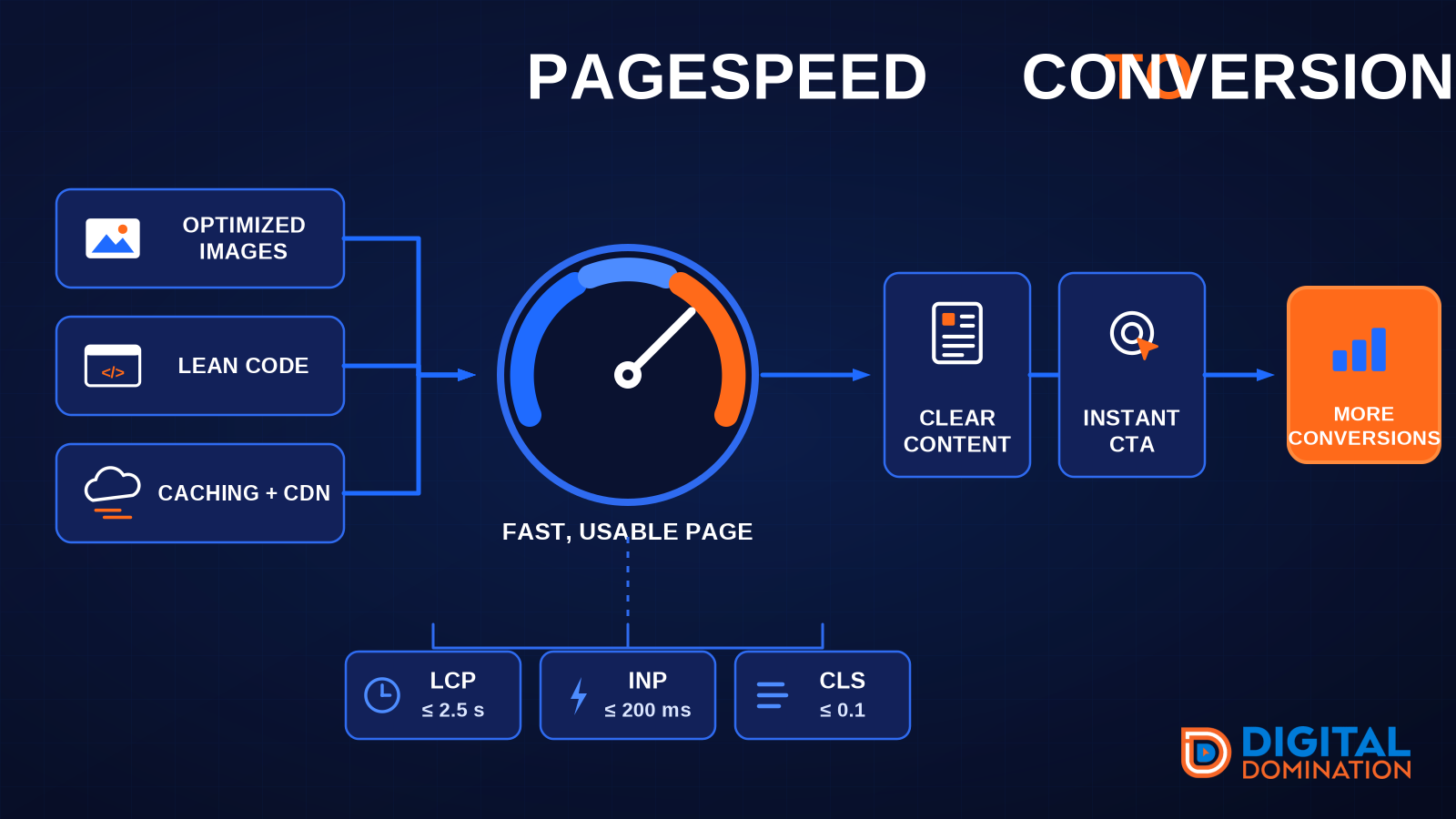
Google’s Core Web Vitals “good” thresholds are LCP 2.5 s, INP 200 ms and CLS 0.1 at the 75th percentile of field data. You do not need to memorize those terms. Ask your web or SEO provider whether your most important booking pages pass these checks for real users, especially on mobile.
Start with owner-level fixes that do not require a full rebuild:
- ▸Compress oversized photos on activity pages.
- ▸Remove popups that block booking buttons on mobile.
- ▸Check that forms, calendars and payment steps work on a phone.
- ▸Make sure important pages are not blocked from crawling.
- ▸Fix broken links from Google Business Profile, email campaigns and social bios.
What to do about it
The decision is not “aggregators or local SEO.” Many tour and activity businesses need both. The problem is relying on aggregators while your own Google presence slowly becomes weaker. That is how a useful distribution channel can turn into a dependency.
Use this update as a prompt to tighten the parts you control. You may not control who qualifies for every EEA unit, but you can control whether your direct presence is easy to find, easy to trust and easy to book.
Take these steps this week:
- ▸Search from an EEA location or ask your SEO provider to document what appears for your core activity queries.
- ▸Compare your direct page against your aggregator listing and identify what the aggregator explains better.
- ▸Update your Google Business Profile categories, booking link, services, photos and description.
- ▸Improve one top activity page with original copy, clear details and a cleaner booking path.
- ▸Track direct bookings separately from aggregator bookings so you can see channel dependence.
- ▸Ask whether your provider monitors both Maps visibility and standard Search layouts for travel intent.
Questions to ask your SEO provider
A local SEO report that only lists keyword positions is not enough for this kind of change. You need to know what appears on the actual results page and whether your business has a practical path to more direct bookings. The right provider should be able to show screenshots, explain layout changes and connect recommendations to pages you can improve.
Ask direct questions and expect plain answers:
- ▸Are you checking EEA search results for our most important tour or attraction queries?
- ▸Do you review whether aggregator units appear above our organic result?
- ▸Which direct-booking pages are crawlable, indexed and strong enough to compete?
- ▸Are our Google Business Profile links pointing to the best booking pages?
- ▸Do we have unique content that is better than our reseller descriptions?
- ▸How are you measuring direct booking visibility, not just traffic?
Do not panic, but do not wait
This update does not mean direct bookings are dead. It does mean Google is continuing to organize travel and activity searches in ways that can favor structured booking experiences. If aggregators provide cleaner information than your own site, they may win the click even when the customer wanted your business.
The practical move is to make your direct path stronger now. That means cleaner pages, better local information, faster mobile performance and tracking that separates direct demand from intermediary demand. You do not need to overhaul everything this week, but you should start with the pages and profiles that influence booking decisions first.
The decision for local operators
The real question is whether you want aggregators to be your main Google strategy or one part of a wider booking mix. If your direct site is weak, more dependence may feel convenient in the short term. Over time, it can limit how much control you have over the customer journey.
Local SEO and site cleanup are not abstract marketing chores here. They are how you protect your direct booking path when Google changes the search result around you. For tour operators, attractions and activity businesses, the safest position is to have strong aggregator listings where they make sense, while making your own Google presence strong enough that customers can book direct without friction.
Digital Domination is a Las Vegas local SEO agency serving local service businesses nationally. Our local SEO services page at digitaldomination.ai/local-seo-services/ explains how we work on Google Business Profile optimization, local rankings, website cleanup and local visibility. To see how your business appears across your market, start with the free GeoGrid scan at digitaldomination.ai/scan/.
Keep reading
Related guides
- ▸Google sign-in test raises local rank tracking risk
- ▸Local SEO services for HVAC companies
- ▸Local SEO services for plumbers
Put it into action
Frequently Asked Questions
What are Google EEA things-to-do units?
They are Google Search units tied to things-to-do queries in the European Economic Area. Google Search Central says the EEA aggregator unit and supplier unit now support these queries, which can include tours, attractions and activities.
Will this affect my tour business if I am not in Europe?
It can still matter if European travelers search for and book your activity. A U.S. attraction, venue or tour operator may be affected when the searcher is in the EEA or when Google shows EEA-specific layouts.
Does this mean aggregators will outrank my website?
Not necessarily. It means eligible aggregators may appear in a dedicated Search unit for certain things-to-do queries, which can sit in a highly visible position. Your direct site still needs strong pages, clear booking information and local visibility to compete for clicks.
Should I stop using tour aggregators?
Not automatically. Aggregators can be useful distribution partners, but they should not be your only reliable source of Google bookings. The goal is to strengthen your direct presence so you are not fully dependent on intermediary platforms.
What should I fix first for more direct bookings?
Start with your top activity or ticket page. Make sure it is crawlable, mobile-friendly, specific to the experience and connected from your Google Business Profile booking link. Then improve photos, FAQs, meeting point details and the booking button placement.
How do I know if these EEA units show for my searches?
Ask your SEO provider to check real search results from EEA locations for your core activity keywords. They should document whether aggregator units appear, where your direct site shows and what a traveler sees before clicking.
Does local SEO still matter for things-to-do searches?
Yes. Google’s local ranking factors are relevance, distance and prominence, and travelers often compare Search, Maps, reviews and websites before booking. A complete profile and strong direct-booking pages can help you compete even when the result layout changes.
Can Digital Domination check my local visibility?
Yes. Digital Domination’s GeoGrid scan checks 169 points across a market to show how visible you are locally. You can start with the free scan at digitaldomination.ai/scan/.
The Local SEO Trinity
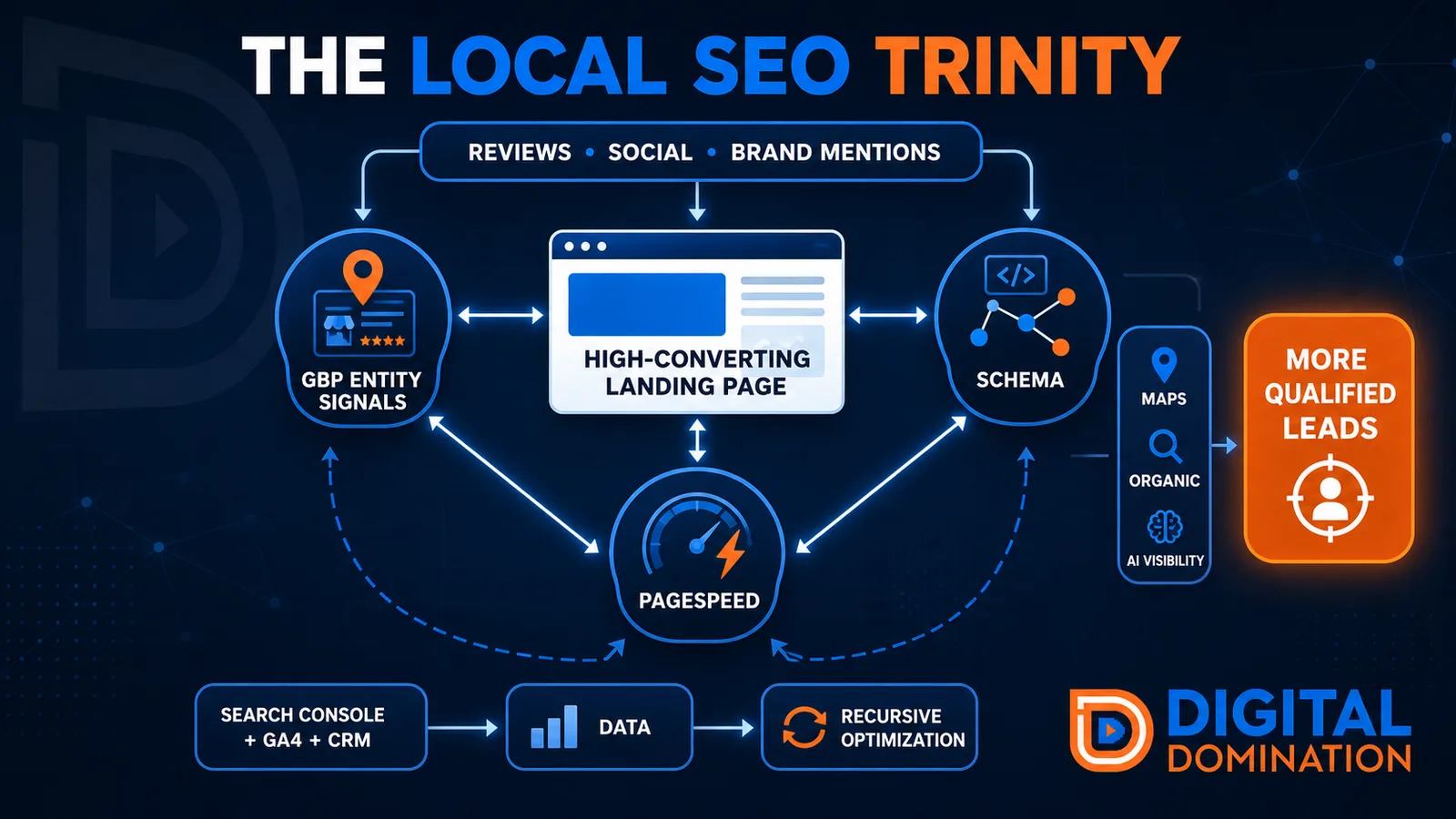
Think of a three-legged stool. Your Google profile, your website, and your reviews all have to hold you up. If one leg is short, the whole thing wobbles.
GBP entity signals
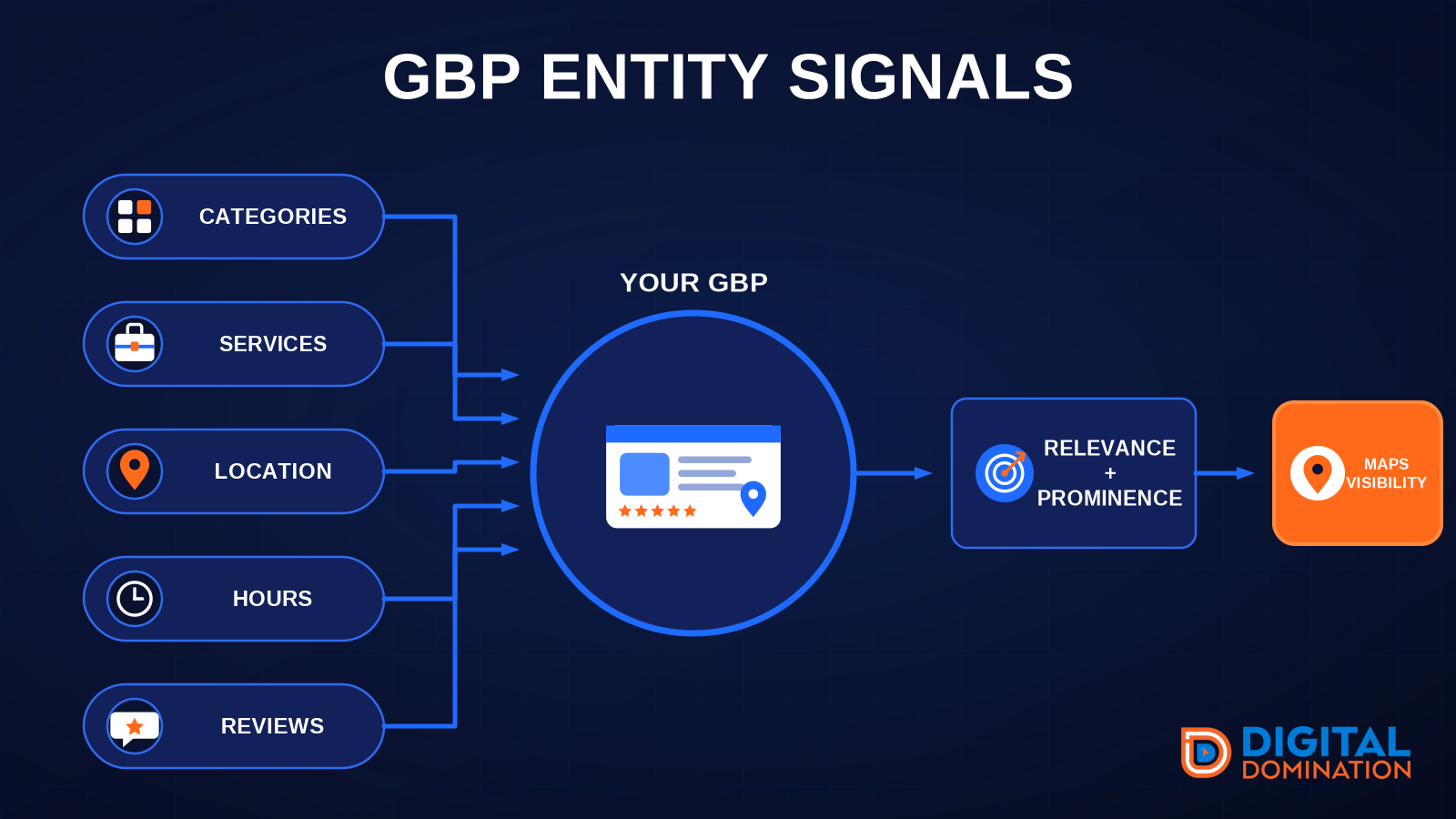
This leg is your Google Business Profile. GBP means Google Business Profile. It covers your categories, your services, your location, your hours, and your reviews. Google uses those facts to decide who to show.
Your Google profile is your storefront sign. If the sign is missing, or it names the wrong shop, people drive past.
PageSpeed to conversion
This leg is your website, above all on a phone. Small images, lean code, and caching make a page fast. A fast, clear page is what turns a visit into a call. Phone speed is one of the 12 Trinity checks because a slow page loses the call before anyone sees your offer.
Your website is the showroom. If the door sticks, people leave before they look around.
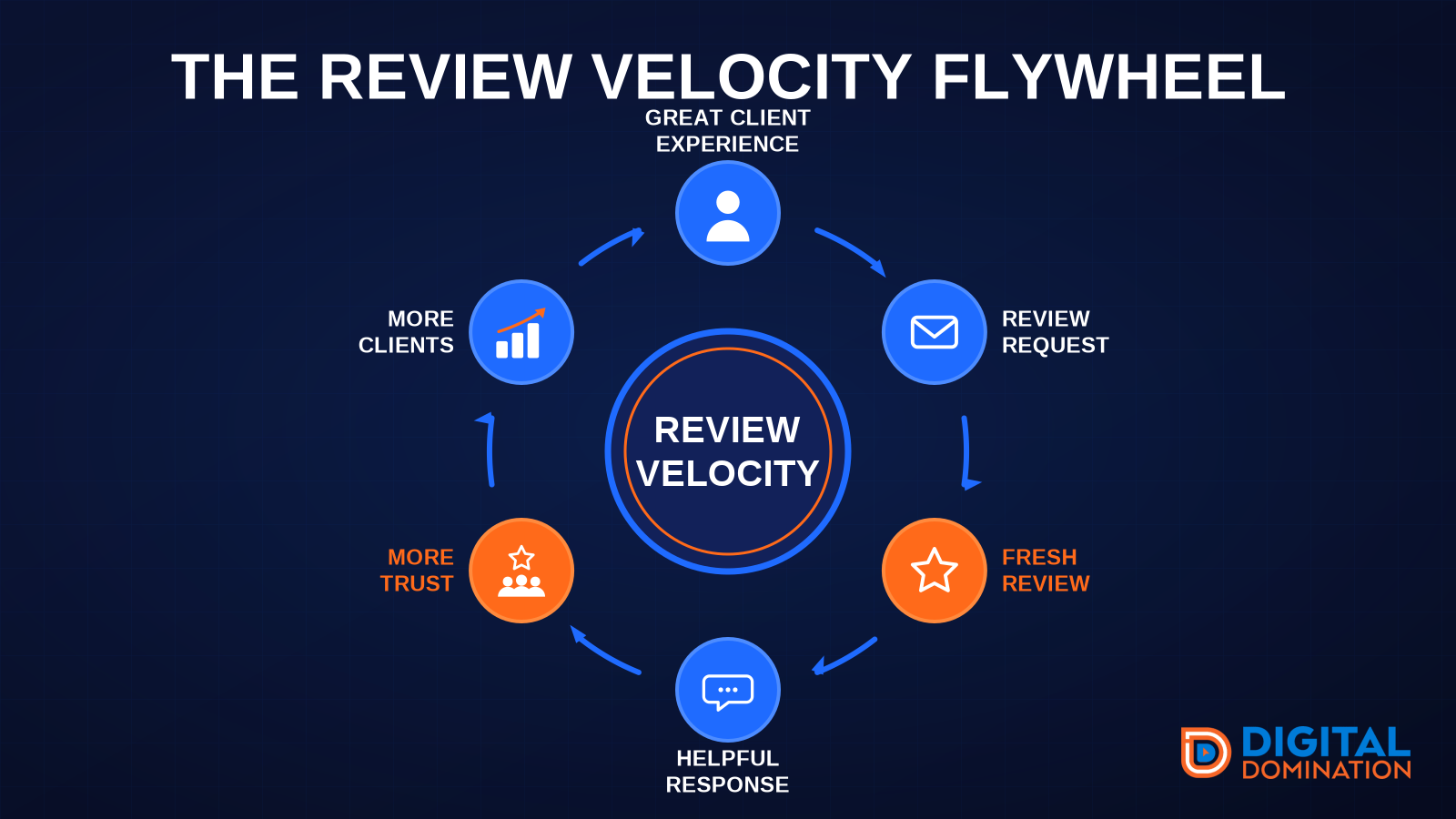
The review velocity flywheel
This leg is reviews and reputation. A good visit leads to a review request, then a fresh review, then a helpful reply, then more trust, then more customers. When the scan can find your Google listing, it shows your rating, your recent reviews, and how many you answered.
Reviews are word of mouth. One kind word helps. A steady stream of real reviews, and a reply from you, helps more.
How this turns into revenue
Being found in more searches leads to more calls. More calls lead to more booked jobs. More booked jobs lead to more revenue.
Example numbers, not a real business: 40 calls from search in a month, a 25 percent close rate, and a $400 average job. That is 10 booked jobs. That is $4,000. The math is the lesson. It is not a promise.
The full page has a box where you can type your own average job value and close rate.
One real story, from our car dealership case study: Medina Auto Group went from invisible on Google Maps to dominating every high-intent search across their market. The turnaround spanned all four of their rooftops at once. The same page says the team eliminated 89 unfair one-star reviews that had been dragging the dealership's reputation down and keeping it out of the Map Pack. It also says: “Results described here are exceptional and non-typical. Outcomes vary based on market conditions, competition, and implementation. No guarantees are made regarding earnings, rankings, or conversions.”
Free strategy call
More booked jobs start with a clear plan
Book a free strategy call. We look at your Google profile, your website, and your reviews, and we tell you what to fix first.
Free. You pick the time. A real person shows up.