
Another unconfirmed ranking spike just landed. Hold the edits.
October 24 and October 27 both show up in the chatter. Google has not confirmed an update. Write down the date someone noticed a dip, then wait for the window to settle before you touch the profile or the pages.
What was reported
On October 27, 2026, Barry Schwartz at Search Engine Roundtable wrote that he was seeing a larger spike in ranking volatility, and more SEO chatter, over the previous day. He said the movement looked like it had started about 12 hours before that post. Google had not confirmed an update. He noted he had just reported a separate unconfirmed spike on Saturday, October 24, and that he had also logged unconfirmed chatter on October 20 and 21 and on October 16.
The same article reminds readers that the September 2026 spam update started on Thursday, September 24, 2026, around 12:00 pm ET, and completed on October 8, 2026, at 4:37 am ET. The October spikes are not that update. They are unconfirmed. The tracking tools he charts, including Semrush, were hot the morning of October 27. The comment chatter he quotes is mostly about websites, news, and Discover, and it disagrees with itself: some people seeing keyword movement without traffic, some seeing a bad Monday, some saying it feels like a rollout.
Two unconfirmed spikes in three days is enough to make an owner rewrite a homepage. It is not enough to know what moved, or whether local packs moved with it.
A web ranking spike and a Map Pack dip are different logs
The Roundtable piece is about Google search ranking volatility. It is not a Map Pack report. Local packs can sit still while organic pages jump around, and the reverse happens too. Before anyone diagnoses a client, we look at our own public Map Pack Volatility Index, which rechecks 25 packs, five trades across five metros, each day.
In the index file published with the site on October 28, 2026, the reading was 27 and labeled shaky on October 26, 14 and labeled calm on October 27, and 9 and labeled calm on October 28. October 25 is stored as a baseline day with no index number. October 24 is not in that file. Those numbers are a sample of packs, not a national local update, and they are not a client result.
Use them as a brake. If organic chatter is loud and the packs we track are calm, a single client who "feels down" on October 27 is not a reason to change the primary category that afternoon. If a specific pack did move, you still want the date, the term, and the calls, not a same day rewrite.
What we do before we call it a problem
On a client account we do not edit the Google Business Profile, the service pages, or the categories because a rank tool flickered. We log three dates and then we wait long enough to see if the flicker repeats.
The date the owner or the office first noticed calls or ranks were off. The date of the nearest public window: the October 16, October 20 to 21, October 24, and October 27 chatter, plus the September 24 to October 8 spam update if the drop is older than that. And the date of the last edit anyone made to the profile, the site, the phone number, or the ads.
If the notice date lines up with a spike window and nobody changed the profile that week, the working theory is volatility. Hold. If the notice date lines up with a category change, a new call tracking number, or a suspended listing, the working theory is the edit. Fix that. The spike is a coincidence until the dates say otherwise.
- ▸Write the date the client noticed the dip, in the account notes, the day they say it
- ▸Do not change primary category, services, service area, or the homepage during the spike window
- ▸Pull calls and form fills for the same week, not only the rank screenshot
- ▸Check the Map Pack Volatility Index before you tell the client "Google updated"
- ▸Revisit after the chatter cools, with the same terms, from the service area
What owners should do today
If you noticed a dip, write down the date you noticed it and what you were looking at: a Maps search, a call log, or a report. Send that date to whoever manages the profile. Ask them to hold edits until they have compared it to the October windows and to the last change on the account.
If you did not notice a dip, do not go looking for one and then "optimize" the profile to feel useful. A quiet week is a fine week.
The public index is at digitaldomination.ai/map-pack-volatility/. How we work a pack when the dust has settled is on Google Map Pack SEO. If you want a person to look at the dates with you, book a call.
Source
Search Engine Roundtable, Barry Schwartz, Unconfirmed Google Search Ranking Update: Volatility and Chatter Spike, October 27, 2026. Google had not confirmed an update at the time of that report. Map Pack index readings are from Digital Domination's public volatility file dated October 28, 2026, for the 25 tracked packs only.
Hold the edits
Log the date before anyone touches the profile
Check the daily Map Pack index, write down when the dip showed up, and book a call if you want those dates read against the October windows.
See today's Map Pack indexKeep reading
Related guides
- ▸Local SEO services vs doing local SEO yourself
- ▸Local Service Ads Vs Search Ads
- ▸Most local business websites still lack LocalBusiness schema
Put it into action
Frequently Asked Questions
Did Google confirm a ranking update on October 24 or October 27, 2026?
No. Search Engine Roundtable reported unconfirmed volatility on both dates, and Barry Schwartz wrote that Google had not confirmed an update. He also pointed back to unconfirmed chatter on October 16 and on October 20 and 21.
Should I edit my Google Business Profile if rankings dipped this week?
Hold the edits. Log the date you noticed the dip, check whether anyone changed the profile or the site that week, and compare the date to the October spike windows. A category or homepage change made during a spike is hard to undo and harder to diagnose.
Does this spike mean my Map Pack moved?
The Roundtable report is about search ranking chatter, not a Map Pack study. Our public index of 25 packs read shaky on October 26 and calm on October 27 and October 28. Check the index, and check your own terms, before you assume local rankings moved with the web chatter.
How is this different from the September 2026 spam update?
Search Engine Roundtable says the September 2026 spam update ran from about 12:00 pm ET on September 24 to 4:37 am ET on October 8. The October 24 and October 27 spikes are later, separate, and unconfirmed.
What should I send my agency if I think we dropped?
The date you noticed it, the term you searched, whether you were on a phone in the service area, and whether calls changed. That is more useful than a request to rewrite the site the same day.
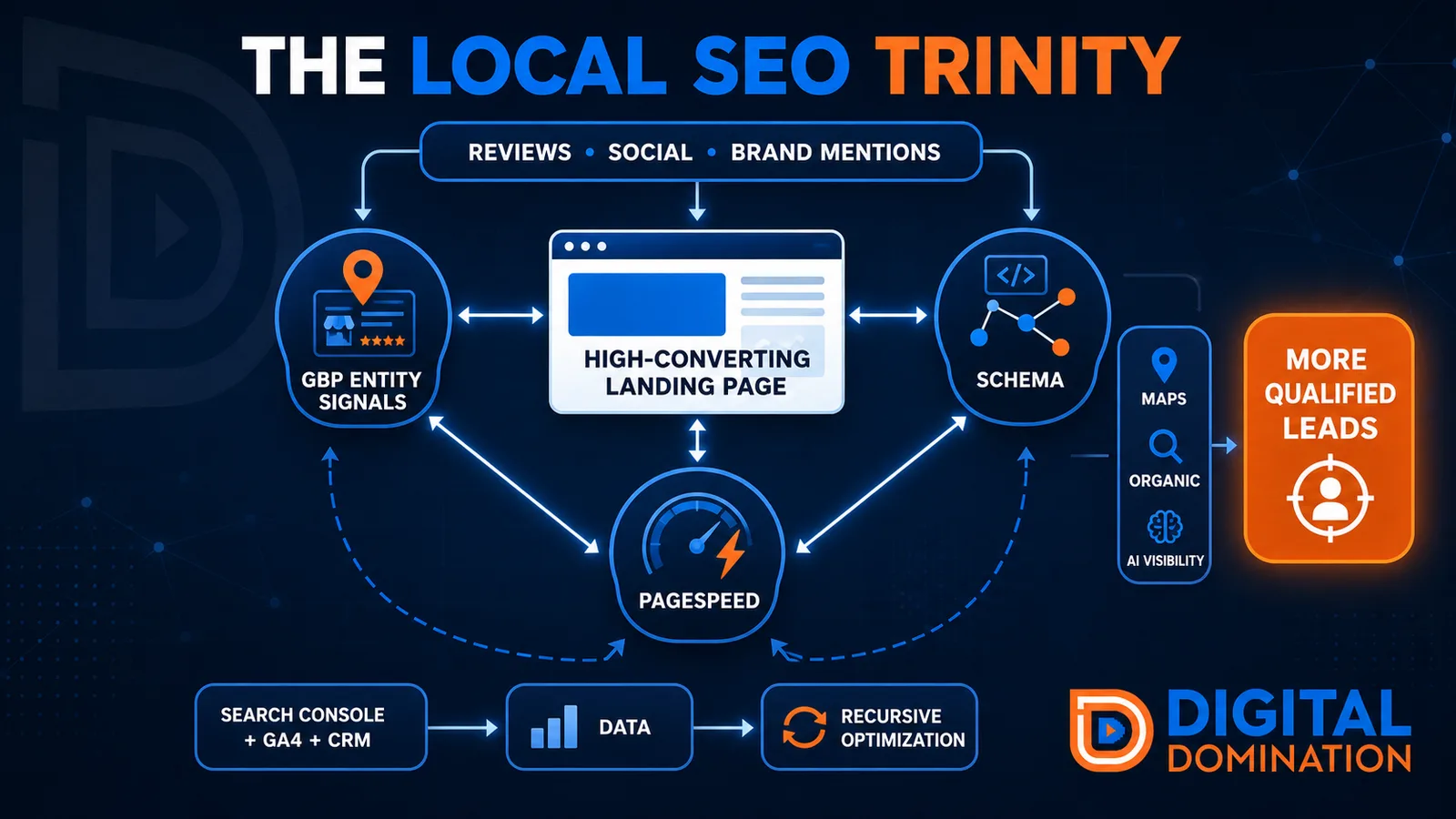
The Local SEO Trinity
Think of a three-legged stool. Your Google profile, your website, and your reviews all have to hold you up. If one leg is short, the whole thing wobbles.
GBP entity signals
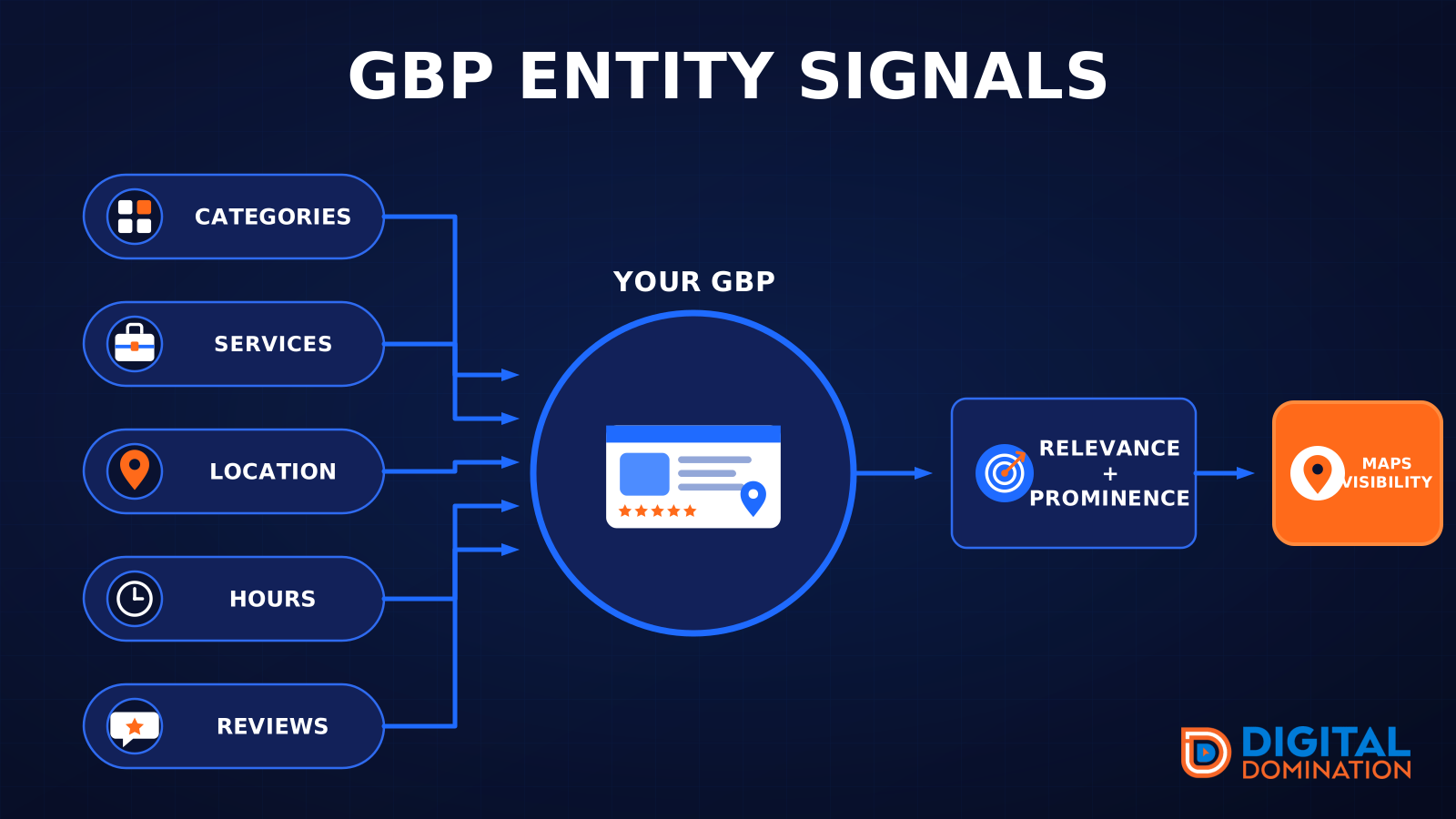
This leg is your Google Business Profile. GBP means Google Business Profile. It covers your categories, your services, your location, your hours, and your reviews. Google uses those facts to decide who to show.
Your Google profile is your storefront sign. If the sign is missing, or it names the wrong shop, people drive past.
PageSpeed to conversion
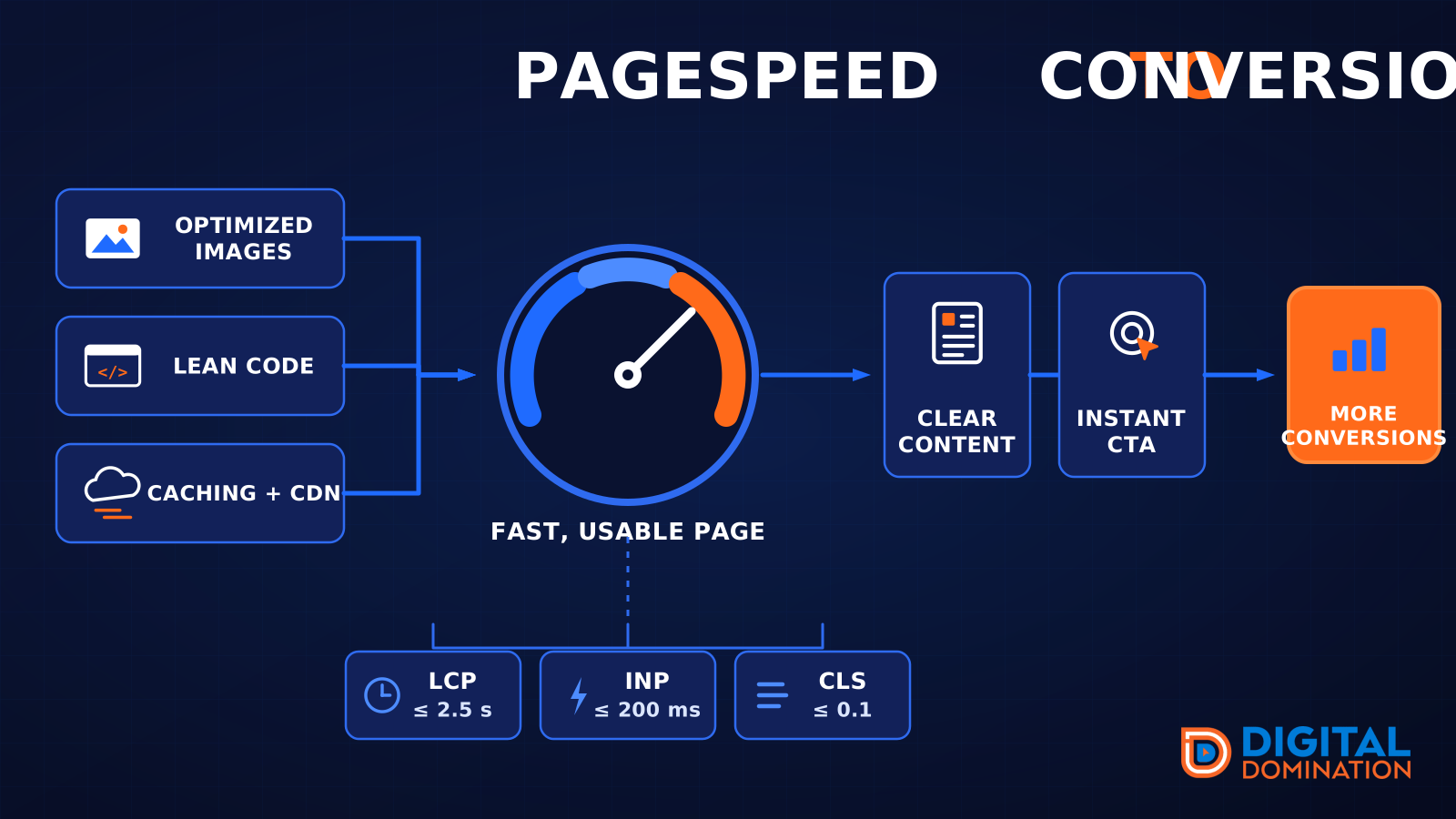
This leg is your website, above all on a phone. Small images, lean code, and caching make a page fast. A fast, clear page is what turns a visit into a call. Phone speed is one of the 12 Trinity checks because a slow page loses the call before anyone sees your offer.
Your website is the showroom. If the door sticks, people leave before they look around.
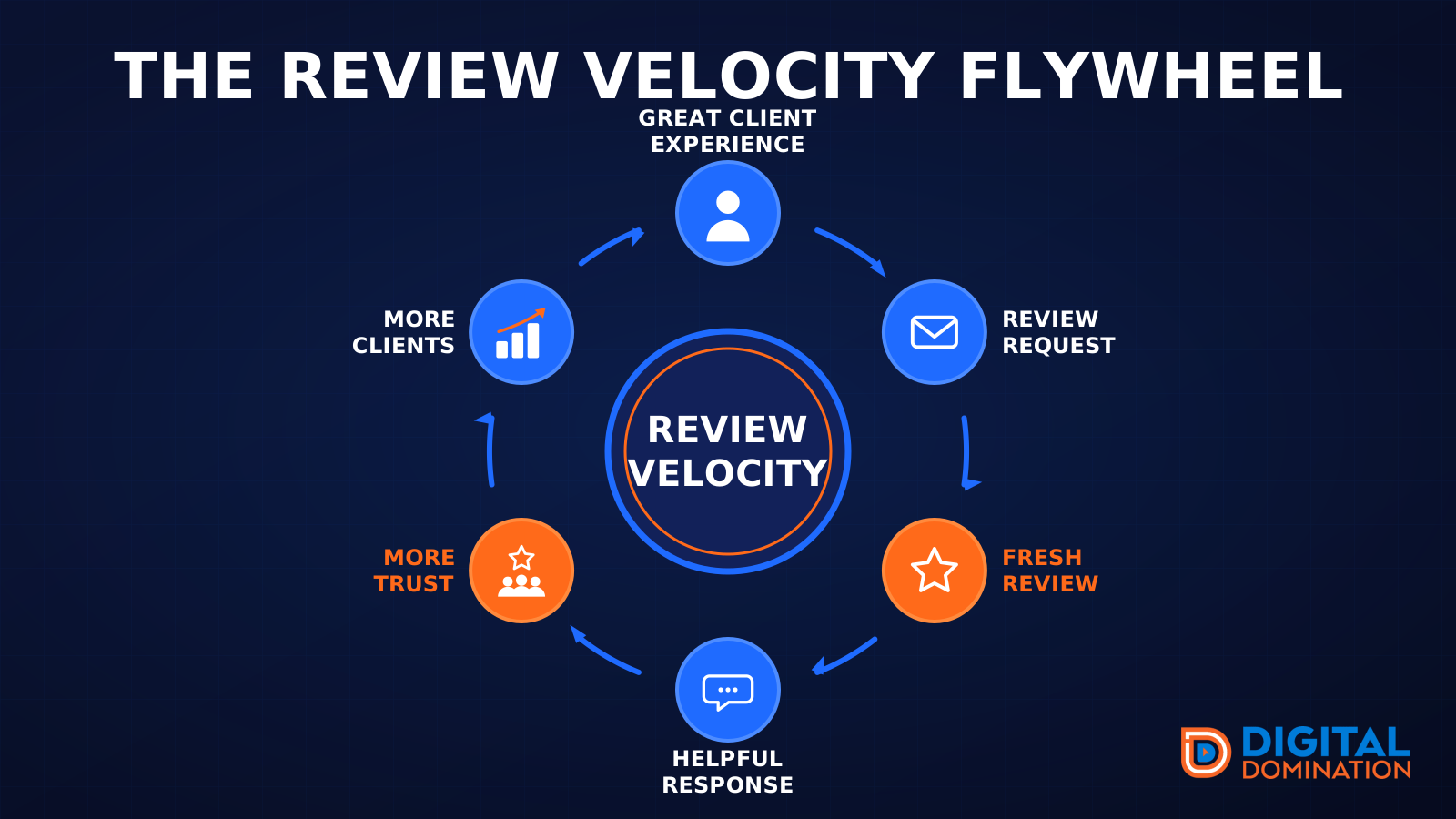
The review velocity flywheel
This leg is reviews and reputation. A good visit leads to a review request, then a fresh review, then a helpful reply, then more trust, then more customers. When the scan can find your Google listing, it shows your rating, your recent reviews, and how many you answered.
Reviews are word of mouth. One kind word helps. A steady stream of real reviews, and a reply from you, helps more.
How this turns into revenue
Being found in more searches leads to more calls. More calls lead to more booked jobs. More booked jobs lead to more revenue.
Example numbers, not a real business: 40 calls from search in a month, a 25 percent close rate, and a $400 average job. That is 10 booked jobs. That is $4,000. The math is the lesson. It is not a promise.
The full page has a box where you can type your own average job value and close rate.
One real story, from our car dealership case study: Medina Auto Group went from invisible on Google Maps to dominating every high-intent search across their market. The turnaround spanned all four of their rooftops at once. The same page says the team eliminated 89 unfair one-star reviews that had been dragging the dealership's reputation down and keeping it out of the Map Pack. It also says: “Results described here are exceptional and non-typical. Outcomes vary based on market conditions, competition, and implementation. No guarantees are made regarding earnings, rankings, or conversions.”
Free strategy call
More booked jobs start with a clear plan
Book a free strategy call. We look at your Google profile, your website, and your reviews, and we tell you what to fix first.
Free. You pick the time. A real person shows up.