
When to choose Google Maps optimization services instead of hiring an in-house marketer
A practical buying guide for local owners deciding between a specialized Google Maps provider and an employee who handles marketing inside the business.

The short answer for a local business owner
Choose Google Maps optimization services when local search is already affecting your phone calls, your category is competitive, your profile has ranking or visibility problems, or you need someone accountable for Map Pack movement rather than general marketing activity.
Hiring an in-house marketer or marketing coordinator makes more sense when your Google Business Profile is stable, your competition is light, you have only a few locations, and your team can reliably handle reviews, profile updates, local pages, citations, and reporting every week.
The key difference is focus. A coordinator may be useful for many day-to-day tasks, but Google Maps performance is a specific discipline. Google says local results are mainly based on relevance, distance, and prominence, and those factors touch your profile, website, reviews, links, categories, location signals, and business information. If the outcome you need is better visibility in the Map Pack, you are usually buying a specialized process, not just extra hands.
Why this decision matters more than most marketing hires
Google is often the first place people look for local services. BrightLocal reported that 61% of consumers started their most recent local business search on Google, with 52% using Google Search and 9% using Google Maps. BrightLocal also reported that 71% of consumers used Google at some point during their most recent local business search.
That does not mean you can buy your way into a better position. Google Business Profile Help says there is no way to request or pay for a better local ranking on Google. The work has to support the signals Google uses, including relevance, distance, and prominence.
For an owner, the decision is not really employee versus vendor. It is whether you need a generalist to help with marketing chores or a specialist who lives inside the local search system every week. The stakes are higher when your best leads come from urgent searches such as plumber near me, dentist open today, auto repair near me, or injury lawyer in my city.
When an in-house marketer is probably enough
The in-house path can work well when the job is manageable and the risk is low. A good coordinator can keep your profile updated, request reviews properly, post photos, help maintain local pages, coordinate with your website vendor, and pull simple reports for ownership.
This path is strongest when the business already has a clean foundation. If the profile is verified, the address is legitimate, the name matches the real-world business, competitors are not heavily optimizing, and leadership can supervise the details, an employee can often keep things moving.
The in-house or DIY path is a reasonable fit when these conditions are true:
- ▸Your Google Business Profile is verified and has no policy issues.
- ▸You have one location or a small number of easy-to-manage locations.
- ▸You are not fighting aggressive competitors in every suburb or neighborhood.
- ▸Your team can request and respond to reviews every week without incentives.
- ▸Your website already has accurate location and service information.
- ▸Someone checks profile edits, suggested updates, photos, and reporting on a set schedule.
- ▸You can tolerate slower learning because the employee has other duties.
When Google Maps optimization services are the smarter buy
Google Maps optimization services are usually the better choice when ranking is the problem, not just profile housekeeping. If you are invisible outside a small area, showing up for the wrong services, losing calls to competitors, or dealing with profile risk, a specialist should be able to diagnose the problem faster than a new hire learning on the job.
This is especially true when your market is crowded. A marketing coordinator may know how to update a profile, but may not know how to read a GeoGrid, spot category mismatches, evaluate local landing pages, assess prominence signals, or separate a real ranking issue from a proximity issue.
Consider a specialist when you see these signs:
- ▸You rank near your office but disappear a few miles away.
- ▸Competitors with weaker-looking profiles outrank you.
- ▸Your profile was suspended, reinstated, renamed, moved, merged, or edited by Google.
- ▸You are opening another location or service area and cannot afford guesswork.
- ▸You need weekly visibility reporting, not just a monthly activity recap.
- ▸Your coordinator is already overloaded with phones, events, email, social posts, and admin work.
- ▸You need someone who understands Google policy before making risky profile changes.
The cost question is not just salary versus service fee
Many owners start by comparing a vendor fee to an employee salary. That is too narrow. The Bureau of Labor Statistics reported a May 2025 median annual wage of $78,760 for market research analysts and marketing specialists. SHRM reported a 2025 nonexecutive average cost per hire of $5,475 and an executive average cost per hire of $35,879.
Those numbers do not tell you what you should pay locally, and they do not include every business cost tied to a hire. They do show that hiring is a real investment before you know whether the person can improve local rankings.
A service provider also has a cost, but you should compare it to the outcome and the expertise you need. Digital Domination does not publish a standard retainer for the Maps Domination Program because pricing is set per market on a qualification call and tied to the ranking outcome.
When you compare the two options, look at the full buying picture:
- ▸Recruiting time and hiring cost.
- ▸Salary, benefits, payroll burden, tools, and management time.
- ▸Ramp-up time for a generalist learning local SEO.
- ▸Risk from profile mistakes, address mistakes, or review policy mistakes.
- ▸Whether the person is accountable for rankings, calls, and visibility, or only activity.
- ▸Whether you need one employee or a system that includes tracking, technical review, content, profile work, and reporting.
What a good Google Maps provider should actually do
A serious Google Maps provider should not promise that it can pay Google for placement. Google says businesses cannot request or pay for a better local ranking. The provider should be able to explain how its work supports relevance, distance, and prominence while staying inside Google’s rules.
Google Business Profile Help says complete and detailed business information helps Google better understand a business and match it to relevant searches. Google also says prominence is based on information such as links to the business and review count, and that more reviews and positive ratings can help local ranking.
A provider should turn those principles into a clear operating system. It should not be vague about what is being checked, what is being fixed, and how progress is measured.
Look for these concrete checkpoints before you sign:
- ▸A baseline visibility scan that shows where you rank across the service area, not only from one address.
- ▸A profile audit covering categories, services, hours, photos, business description, links, attributes, and ownership access.
- ▸A policy check for business name, address, service area, signage, and eligibility.
- ▸A review plan that asks customers properly without discounts, payments, gifts, or other incentives.
- ▸A website and local page review tied to the services and cities you actually want to rank for.
- ▸Citation and business information cleanup where accuracy matters.
- ▸Tracking that shows ranking movement and call volume, not just tasks completed.
Seven questions to ask before you sign
This is the list to use on a sales call. The best providers will answer plainly. The wrong providers will avoid specifics, promise magic, or talk only about posting more often.
Ask these questions before choosing Google Maps optimization services:
- ▸How do you measure visibility across my service area, not just at my office address?
- ▸What Google Business Profile policy risks do you check before making changes?
- ▸How do you decide which services, categories, and local pages matter first?
- ▸How do you handle reviews without violating Google’s incentive rules?
- ▸What reports will I receive, and will they show ranking movement and call volume?
- ▸Who owns the Google Business Profile, website assets, and reporting data if we stop working together?
- ▸What work is included, what work is not included, and what needs approval from my team?
The Google policy risk an in-house generalist may miss
Some Google Maps mistakes are not just harmless experiments. Google Business Profile Help says a profile name should reflect the real-world business name, and unnecessary information in the name could result in suspension. It also says P.O. boxes and remote mailboxes are not acceptable Business Profile addresses, and a rented virtual office is not eligible if the business does not operate there.
Google also says businesses showing an address on Google should maintain permanent fixed signage of the business name at that address. These details matter because owners sometimes try to improve rankings by adding keywords to the name, using a mail center, or creating a location that is not truly staffed. That can create more harm than good.
Review handling is another risk area. Google says merchants may not offer incentives such as payment, discounts, free goods, or services in exchange for posting a review or revising or removing a negative review. A well-meaning employee can cause trouble by running a promotion that rewards reviews.
Watch for these red flags in either an employee plan or vendor proposal:
- ▸Adding city or service keywords to the business name when they are not part of the real-world name.
- ▸Using a P.O. box, remote mailbox, or unstaffed virtual office as a location.
- ▸Creating location pages or profiles for offices that do not really exist.
- ▸Offering discounts, gifts, or drawings for reviews.
- ▸Ignoring suggested edits from the public.
- ▸Making major profile changes without understanding verification and review timelines.
What to expect after profile changes
Local search work is not instant, and owners should know what normal review timing looks like. Google says verification reviews take up to 5 business days after the business completes the verification steps. Google also says edits to a verified Business Profile usually take up to 10 minutes to review, but can sometimes take up to 30 days.
Suggested edits are another reason weekly monitoring matters. Google says a suggested edit that requires owner review may be automatically published if the owner does not accept or reject it within 4 days and Google has supporting public information. That means your hours, name, phone, website, or other details should not be left unchecked.
A good service or a disciplined employee should have a basic weekly rhythm. The work is not complicated to describe, but it is easy to neglect when the front desk is busy and the owner is in the field.
At minimum, expect someone to watch these items:
- ▸Verification status and ownership access.
- ▸Pending edits and Google updates.
- ▸Suggested public edits that need review.
- ▸Business hours, holiday hours, phone number, and booking links.
- ▸Review requests, new reviews, and owner responses.
- ▸Ranking movement across the service area.
- ▸Calls, direction requests, and other visibility indicators.
Where your website fits into the decision
Google Maps optimization is not only a profile task. Your website helps confirm who you are, what you do, and where you do it. Google Search Central says LocalBusiness structured data can tell Google about business hours, departments, and reviews when a site captures reviews about other businesses.
For a nontechnical owner, the practical point is simple. Your site should not tell a different story than your Google Business Profile. If your profile says you serve emergency plumbing in one city, but your site barely mentions that service or location, you are making Google work harder to understand you.
An in-house coordinator can often help gather photos, service details, staff bios, and location information. A specialist is more useful when the site needs local page strategy, structured data review, internal linking, or alignment between profile categories and service pages.
The website side matters most when:
- ▸You serve multiple cities or neighborhoods.
- ▸You have several major services that customers search separately.
- ▸Your competitors have stronger local pages.
- ▸Your profile links to a thin homepage with little local detail.
- ▸Your locations, hours, phone numbers, or service areas are inconsistent across the web.
How Digital Domination approaches this decision
Digital Domination is built for owners who want Google Maps performance measured across the real service area. The free 169-point GeoGrid scan checks 169 real Google results across the service area, so the conversation starts with visual evidence instead of guesses.
Digital Domination works with one client per trade per service area, which means territory exclusivity is part of the model. The company has spent 20 years learning how businesses earn attention, authority, trust, and rankings online. Its Google Partner and Meta Business Partner badges are shown on its roster page.
For the Maps Domination Program, pricing is set per market on a qualification call and tied to the ranking outcome. Clients receive weekly GeoGrid tracking reports with visual proof of rankings and call volume. Digital Domination also offers the 5-Star Review System for $297/month, with no setup fee, cancel anytime, billed monthly through Stripe.
Use this fit check before requesting a scan:
- ▸You care about Map Pack visibility, not just general marketing tasks.
- ▸You want ranking proof across your service area.
- ▸You want an outside team that already works inside Google Maps systems.
- ▸You are willing to follow Google policy instead of using shortcuts.
- ▸You want territory exclusivity if your trade and service area qualify.
Next step if you are comparing your options
If you are deciding between Google Maps optimization services and an in-house marketer, start with the evidence. If your profile is clean, competition is light, and your team can handle weekly maintenance, an employee or coordinator may be enough. If visibility is inconsistent, competitors are winning the Map Pack, or profile risk is part of the picture, a specialist is usually the safer buy.
For a detailed look at the service, visit Digital Domination’s Google Maps optimization services page. It explains the program, what is reviewed, how ranking is tracked, and how the qualification process works. To see where you actually rank before making a decision, request the free GeoGrid scan page.
Keep reading
Related guides
- ▸The hidden cost of choosing the cheapest Google Maps SEO
- ▸The Maps Domination Program near me
- ▸The Maps Domination Program vs doing local SEO yourself
Put it into action
Frequently Asked Questions
Should I hire a marketer or outsource Google Maps SEO?
Hire a marketer if you need broad help with emails, social posts, events, basic website updates, and review follow-up. Outsource Google Maps SEO if the main problem is ranking, visibility, call volume from local search, or profile risk.
Can an in-house marketing coordinator manage my Google Business Profile?
Yes, if the profile is already stable and the coordinator has time every week. They should monitor edits, respond to reviews, keep information accurate, and understand Google’s rules for names, addresses, and review incentives.
Is Google Maps optimization worth it for one location?
It can be worth it if one location competes in a crowded local market or depends on high-intent calls. If your market is quiet and you already rank well near your customers, basic in-house maintenance may be enough.
Can I pay Google to rank higher in the Map Pack?
No. Google Business Profile Help says there is no way to request or pay for a better local ranking on Google. Local rankings are mainly based on relevance, distance, and prominence.
What should a Google Maps optimization company report to me?
You should see where you rank across the service area, not just from one location. You should also receive clear notes on profile work, review activity, website or local page issues, and call volume when that tracking is part of the program.
What is the biggest risk of doing Google Maps SEO myself?
The biggest risk is making a profile change that violates Google policy or weakens trust signals. Common mistakes include keyword-stuffing the business name, using an ineligible address, ignoring suggested edits, or offering incentives for reviews.
How long do Google Business Profile edits take to show?
Google says edits to a verified Business Profile usually take up to 10 minutes to review, but can sometimes take up to 30 days. Verification reviews can take up to 5 business days after the business completes the verification steps.
What should I do before signing with a Google Maps agency?
Ask for a baseline scan, a policy check, and a clear explanation of what work will be done. Make sure the provider explains reporting, ownership, review rules, and how it measures visibility across your actual service area.
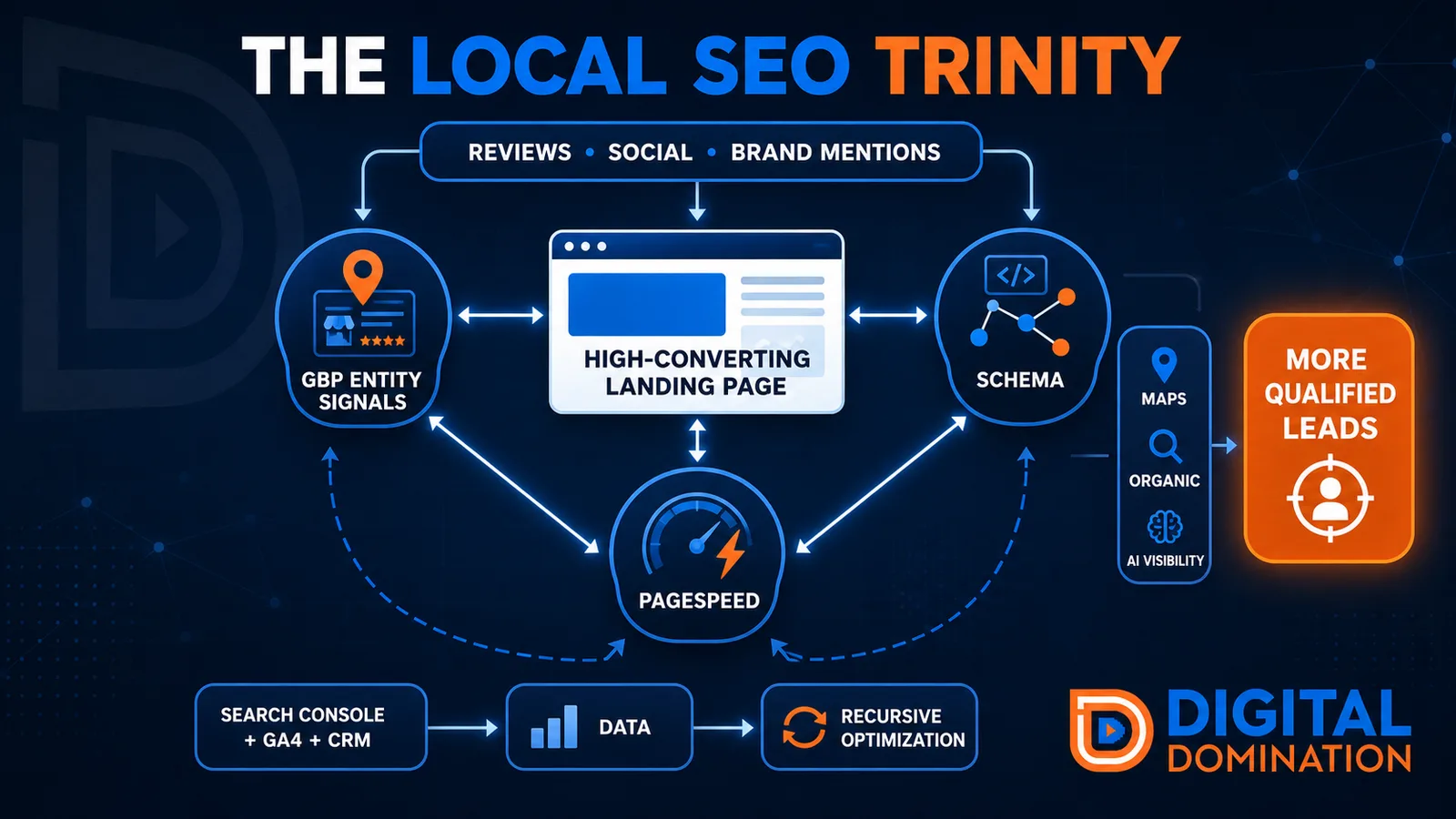
The Local SEO Trinity
Think of a three-legged stool. Your Google profile, your website, and your reviews all have to hold you up. If one leg is short, the whole thing wobbles.
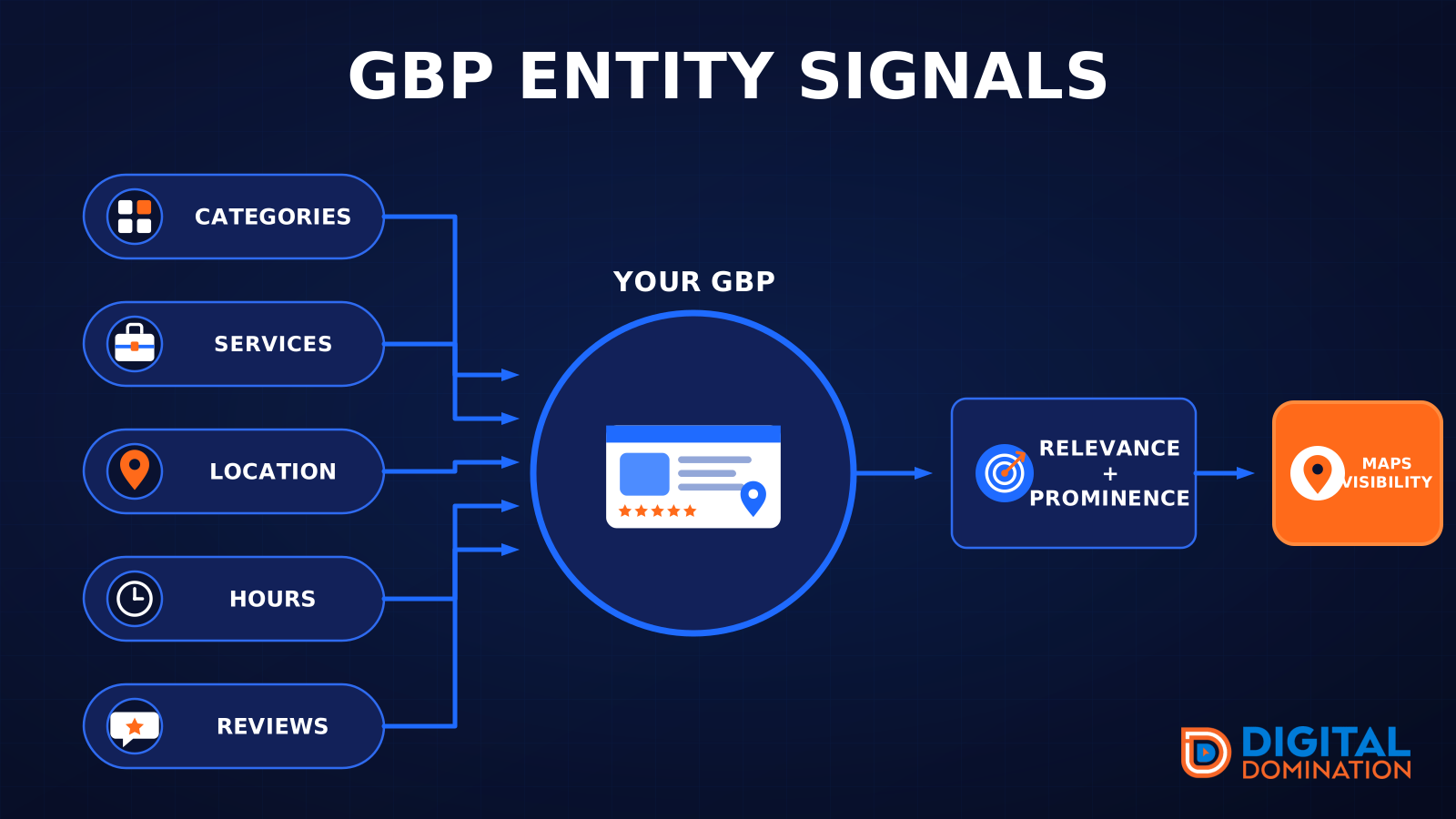
GBP entity signals
This leg is your Google Business Profile. GBP means Google Business Profile. It covers your categories, your services, your location, your hours, and your reviews. Google uses those facts to decide who to show.
Your Google profile is your storefront sign. If the sign is missing, or it names the wrong shop, people drive past.
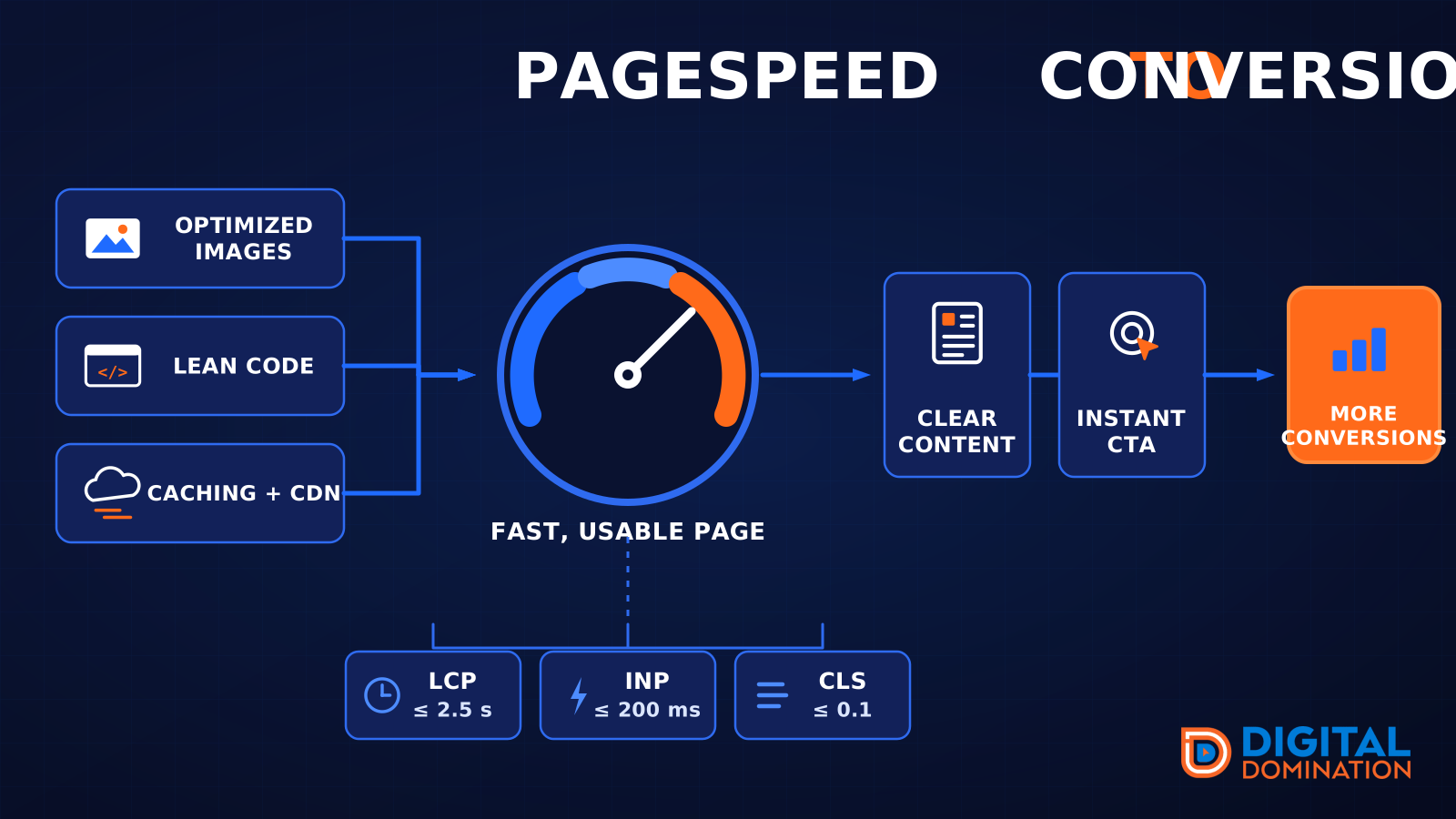
PageSpeed to conversion
This leg is your website, above all on a phone. Small images, lean code, and caching make a page fast. A fast, clear page is what turns a visit into a call. Phone speed is one of the 12 Trinity checks because a slow page loses the call before anyone sees your offer.
Your website is the showroom. If the door sticks, people leave before they look around.
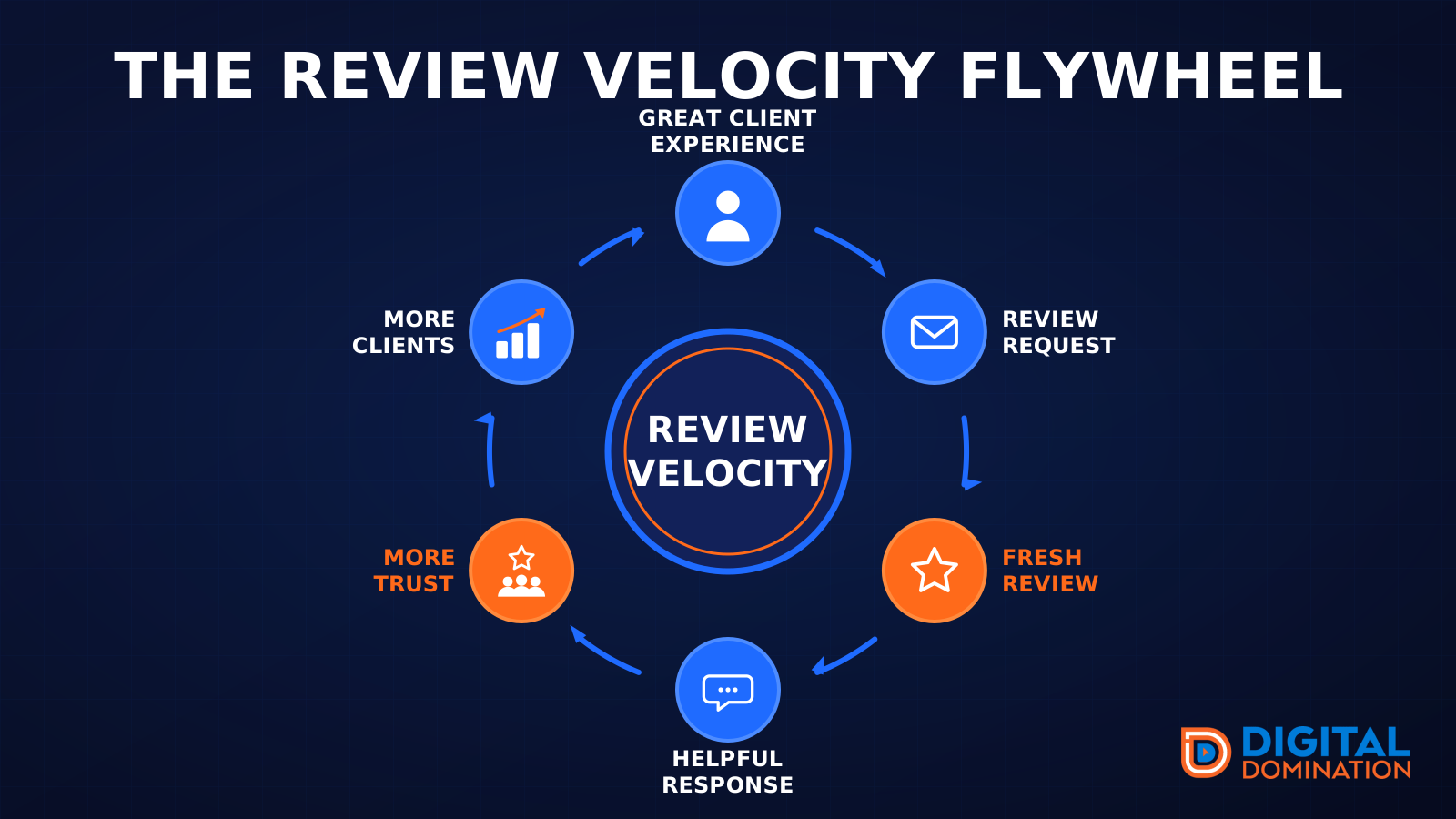
The review velocity flywheel
This leg is reviews and reputation. A good visit leads to a review request, then a fresh review, then a helpful reply, then more trust, then more customers. When the scan can find your Google listing, it shows your rating, your recent reviews, and how many you answered.
Reviews are word of mouth. One kind word helps. A steady stream of real reviews, and a reply from you, helps more.
How this turns into revenue
Being found in more searches leads to more calls. More calls lead to more booked jobs. More booked jobs lead to more revenue.
Example numbers, not a real business: 40 calls from search in a month, a 25 percent close rate, and a $400 average job. That is 10 booked jobs. That is $4,000. The math is the lesson. It is not a promise.
The full page has a box where you can type your own average job value and close rate.
One real story, from our car dealership case study: Medina Auto Group went from invisible on Google Maps to dominating every high-intent search across their market. The turnaround spanned all four of their rooftops at once. The same page says the team eliminated 89 unfair one-star reviews that had been dragging the dealership's reputation down and keeping it out of the Map Pack. It also says: “Results described here are exceptional and non-typical. Outcomes vary based on market conditions, competition, and implementation. No guarantees are made regarding earnings, rankings, or conversions.”
Free strategy call
More booked jobs start with a clear plan
Book a free strategy call. We look at your Google profile, your website, and your reviews, and we tell you what to fix first.
Free. You pick the time. A real person shows up.