
Free local visibility tools, including Tork, vs hiring an in-house marketer
A practical comparison for local business owners deciding whether free diagnostics can show enough call opportunity, or whether one full-time employee needs to own marketing execution every day.
The short answer
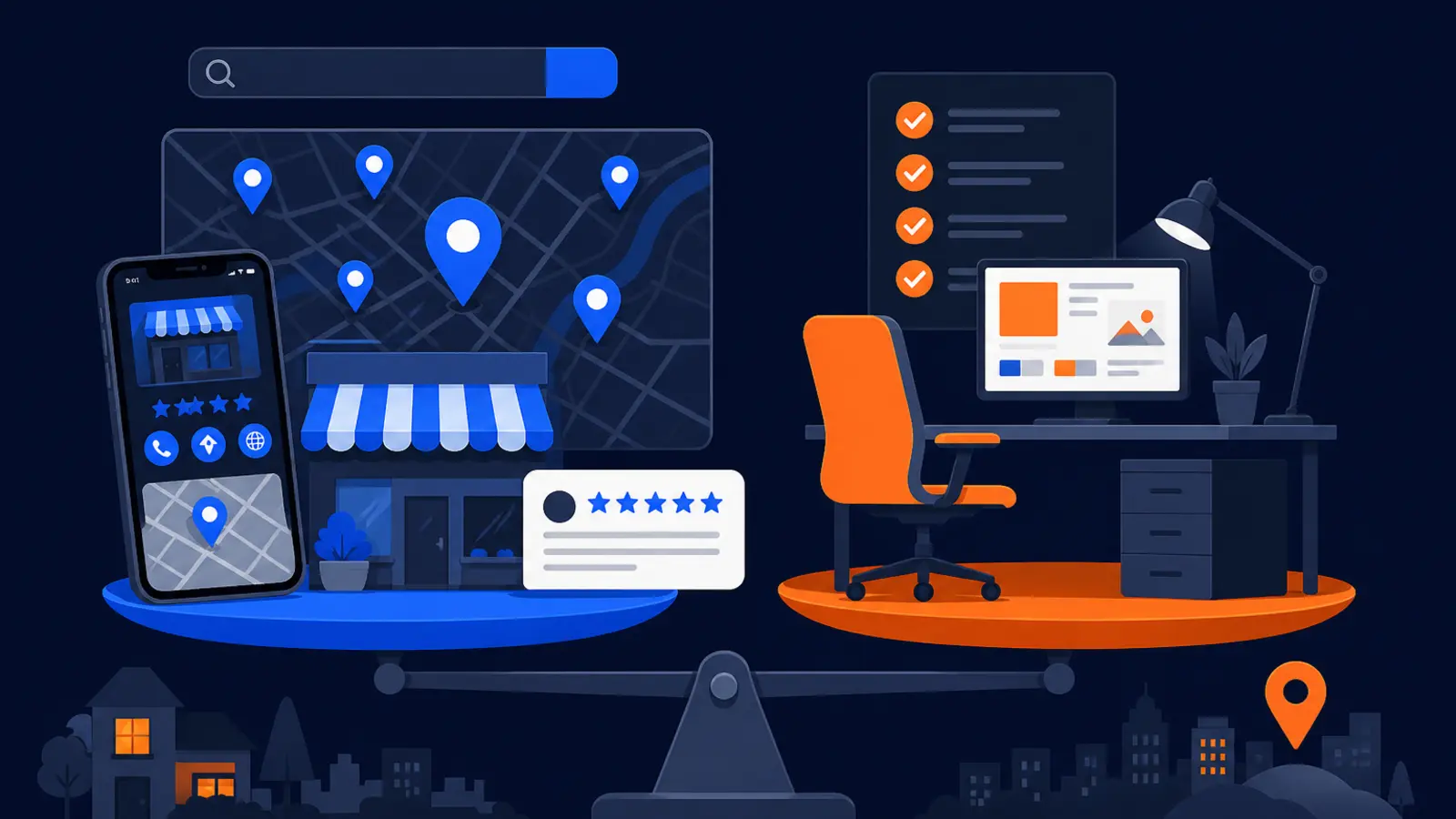
Free local visibility diagnostics and tools can show you where phone call opportunity is being lost, especially in Google Maps, Google Search, reviews, and business profile accuracy. For many local businesses, that is enough to make a smarter next move before hiring a full-time employee.
They do not replace a good in-house marketer when the business needs daily execution across several channels. If your owner, office manager, or dispatcher cannot follow through on updates, photos, review responses, website requests, reporting, offers, and vendor coordination, tools will only reveal the problem. They will not own the work.
So the buying question is not only cost. It is control. Free tools help you see the opportunity. An in-house marketer helps you keep execution moving every week.
- ▸Choose free tools first if you need proof of where calls may be leaking before you spend more.
- ▸Choose an in-house marketer if you need one employee to manage daily cross-channel work and internal follow-through.
- ▸Choose both if you want the marketer to use diagnostics, GeoGrid tracking, and Google data to make better decisions.
What free local visibility tools can actually show you
Google Business Profile Help says a Business Profile lets a business manage how it shows up on Google Maps and Search at no charge. For an eligible local business, that makes it the first place to check before buying ads, hiring staff, or rebuilding a website.
Google Business Profile Help also says a profile can display hours, website, phone number, location, photos, videos, reviews, website links, social media links, and booking links. If those basics are wrong, incomplete, or weak compared with nearby competitors, the business may be missing call opportunities before a customer ever reaches the website.
Digital Domination’s free GeoGrid scan checks 169 real Google results across the service area. That matters because one rank check from the office does not show how visible you are across the neighborhoods where customers search.
A practical free visibility review should help an owner verify these items:
- ▸Whether the business appears in the Map Pack where customers actually search.
- ▸Whether the Google Business Profile has the correct phone number, hours, website, location, and service details.
- ▸Whether review count, rating quality, and recent review activity appear competitive in the local results.
- ▸Whether Google Search Console shows impressions, clicks, average position, and click-through rate for website links on Google.
- ▸Whether the business has measurable call activity from the profile, not just vague visibility.
What Tork adds to the tool-led path
Tork is Digital Domination’s AI local SEO software for Google Business Profiles. For an owner who wants to understand local visibility without becoming technical, a tool like Tork can help organize the work around the profile, not around random marketing opinions.
The important point is that tools should make decisions clearer. They should help you see what needs attention, what Google can display, and what your local ranking picture looks like by area. They should not make you guess whether the work is tied to calls, profile actions, reviews, or rankings.
A tool-led path is strongest when the owner or a staff member can act on the findings. That might mean updating business information, improving service descriptions, adding photos, requesting reviews properly, checking reports, or assigning website edits.
Use tools like Tork and the Digital Domination tools page when you want help with these jobs:
- ▸Diagnosing Google Business Profile gaps.
- ▸Understanding local ranking coverage by area.
- ▸Turning visibility problems into a clear task list.
- ▸Checking whether the business has the basic Google assets in place.
- ▸Giving a future in-house marketer better data to work from.
Where free tools stop helping
A diagnostic cannot answer the phone, train the front desk, publish a steady flow of local content, coordinate a web developer, or chase review requests after a job is finished. It can point to the problem. It cannot create internal accountability by itself.
Google Business Profile Help says profile edits usually take up to 10 minutes to review, but can take up to 30 days. Google also lists verification methods such as phone or text, email, live video call, and mail, and says most mailed verification codes arrive within 14 days and expire after 30 days. Someone has to monitor those steps and keep the process moving.
Google Business Profile Help says owners can invite owners or managers who can edit information, respond to reviews, and manage posts without sharing a password. That helps with safe access, but the business still needs a person responsible for doing the work.
Free tools usually stop being enough when the issue is execution, not diagnosis. Watch for these signs:
- ▸Reports are reviewed, but no tasks are completed.
- ▸Reviews come in, but no one responds consistently.
- ▸Photos, services, hours, and seasonal updates are always late.
- ▸The website needs changes, but no one coordinates them.
- ▸The owner is still approving, writing, checking, and reminding everyone.
What an in-house marketer or coordinator gives you
The in-house marketer path suits a buyer that needs one employee to own daily cross-channel marketing execution, reporting, website coordination, review response, and internal follow-through. That person becomes the internal driver, not just another outside recommendation.
O*NET OnLine lists Marketing Research Coordinator as a reported job title under Market Research Analysts and Marketing Specialists. O*NET also says these specialists may use search marketing tactics, analyze web metrics, and develop recommendations to increase search engine ranking and visibility to target markets.
O*NET lists measuring the effectiveness of marketing, advertising, and communications programs and strategies as a task for this role. In plain English, a good marketing coordinator should help the owner know what is being done, whether it is working, and what needs to happen next.
The Bureau of Labor Statistics reported that the median annual wage for market research analysts and marketing specialists was $78,760 in May 2025. That wage is not the full hiring decision, but it is a useful reality check when comparing free tools with a full-time employee.
An in-house marketer is the better fit when you need one person to own these responsibilities:
- ▸Daily marketing task management.
- ▸Reporting across Google, website, reviews, ads, and vendors.
- ▸Review response and review request coordination.
- ▸Website update requests and follow-through.
- ▸Internal communication with technicians, front desk staff, managers, and ownership.
- ▸Campaign calendars, offers, photos, posts, and local content coordination.
Call measurement is the deciding issue
If the goal is more calls, the comparison should not be based on how busy marketing looks. It should be based on whether the business can see more call opportunity and respond to it.
Google Business Profile Help says performance reports define calls as the number of times a customer clicked the call button on the Business Profile, and a phone number must be added to track that metric. That is not every phone call a business receives, but it is a useful signal from Google Business Profile activity.
Google Search Console Help says performance reports show impressions, clicks, average position, and click-through rate for links to a site on Google. Together, Business Profile performance and Search Console can help an owner separate visibility from action.
The right choice depends on what happens after the report is read. If the owner can use the data and assign tasks, free tools may be enough for the next step. If nobody has time to turn the data into work, an in-house marketer may create more practical value.
- ▸Track Business Profile calls when the phone number is present.
- ▸Check website clicks and impressions in Google Search Console.
- ▸Compare Map Pack visibility across the service area, not only near the office.
- ▸Review whether completed tasks line up with changes in call activity.
- ▸Avoid judging marketing by posts, meetings, or dashboards alone.
Questions to ask before you hire or stay tool-led
Before you sign an employment offer or decide to stay with free tools, ask questions that expose the real bottleneck. The goal is to decide whether you need better diagnosis, better execution, or both.
Use these questions in an owner meeting:
- ▸Do we know where we rank across the full service area, or only from one location?
- ▸Is our Google Business Profile verified, complete, and accurate?
- ▸Who responds to reviews, and how quickly does it happen?
- ▸Who checks Business Profile calls, Search Console clicks, and ranking reports?
- ▸Who updates hours, photos, services, booking links, and social links?
- ▸Who turns marketing findings into assigned tasks with due dates?
- ▸Do we need a full-time employee, or do we first need a clearer local visibility scan?
- ▸If we hire, will the person have authority to coordinate the website, reviews, vendors, and staff?
What to expect and what to verify
A local business owner does not need to become technical to make a good decision. You need a short list of checkpoints that prove whether the tool-led path is organized enough, or whether the business needs a dedicated employee.
Google Business Profile Help says local results are mainly based on relevance, distance, and popularity, and that more reviews and positive ratings can help local ranking. Google also says there is no way to request or pay for a better local ranking on Google. That means your plan should focus on improving the real signals you control, not buying a shortcut.
Here are practical checkpoints to verify before you choose:
- ▸The business is eligible for a Google Business Profile because it interacts with customers in person during business hours.
- ▸The profile is verified, and the owner can manage business information on Google Maps and Search.
- ▸The phone number is present so Business Profile call clicks can be tracked.
- ▸The service area is checked with a 169-point GeoGrid scan, not a single search from the office.
- ▸Search Console is available and shows impressions, clicks, average position, and click-through rate.
- ▸Someone is assigned to review data weekly and complete the next tasks.
- ▸If hiring, the job description includes reporting, review response, website coordination, and internal follow-through.
Who should choose free tools first
Free tools are a smart first step when you do not yet know whether the business has a visibility problem, a profile problem, a review problem, a website problem, or an execution problem. They reduce guesswork before you commit to payroll or a larger marketing program.
This path also suits owners who are still close enough to operations to assign tasks quickly. For example, a two-truck plumbing company with an involved owner may not need a full-time marketer yet. It may need a clear map of where it appears, what is missing from the profile, and which review or website tasks should happen next.
Free tools are a good fit when these statements are true:
- ▸You want to diagnose the call opportunity before hiring.
- ▸You can assign profile, review, and website tasks internally.
- ▸You want to see Google Maps visibility by neighborhood or service area.
- ▸You are not ready for a full-time marketing salary.
- ▸You want a future marketer or agency to start with better data.
Who should hire the in-house marketer
Hiring the in-house marketer is the better path when the owner already knows what should be done, but the work keeps stalling. If marketing tasks die inside the business, more diagnostics will not fix the bottleneck.
This is especially true when the business has multiple services, multiple locations, frequent promotions, regular hiring needs, many reviews, active advertising, website changes, and several vendors. In that situation, one accountable person inside the company can keep the moving parts organized.
Choose the in-house path when these needs are present:
- ▸One employee must own daily marketing execution.
- ▸The business needs cross-channel reporting in one place.
- ▸Review response and customer follow-up need consistent attention.
- ▸The website requires frequent coordination with a developer or vendor.
- ▸Managers and staff need someone to collect photos, updates, offers, and job details.
- ▸The owner wants fewer reminders and more internal accountability.
A practical way to decide this week
Start with proof. Use the Digital Domination tools page to see local visibility resources, including Tork, that help owners understand Google Business Profile and local search opportunities in plain terms.
Then request the free GeoGrid scan from the Free GeoGrid scan page. It checks 169 real Google results across the service area, so you can see whether Maps visibility is strong, weak, or uneven before making a hiring decision.
If the scan shows clear opportunity and your team can act, free tools may be enough for the next stage. If the scan shows opportunity but nobody can own the work, hire the in-house marketer or coordinator and give that person the tools, access, and reporting needed to execute.
- ▸Visit the Digital Domination tools page for local visibility tools and Tork.
- ▸Use the Free GeoGrid scan page to request a 169-point GeoGrid scan.
- ▸Decide whether your real gap is diagnosis, execution, or both.
Keep reading
Related guides
- ▸Google Business Profile post view counts are back
- ▸Google Restaurant Ordering Links
- ▸Google review appeals are delayed
Put it into action
Frequently Asked Questions
Are free local visibility tools enough to get more phone calls?
They can be enough to find where call opportunity is being lost, especially in Google Maps and your Google Business Profile. They are not enough if nobody follows through on profile updates, reviews, website changes, and reporting.
Should I hire an in-house marketer for local SEO?
Hire in-house if you need one person to own daily marketing execution, reporting, review response, website coordination, and internal follow-through. If you mainly need to know where you stand first, start with free diagnostics and a GeoGrid scan.
What does Google Business Profile show me about calls?
Google Business Profile Help says calls in performance reports are the number of times a customer clicked the call button on the Business Profile. A phone number must be added to track that metric.
Can I pay Google for better local rankings?
No. Google Business Profile Help says there is no way to request or pay for a better local ranking on Google. Local results are mainly based on relevance, distance, and popularity.
What should a marketing coordinator do for a local business?
A coordinator should help manage execution, reporting, review response, website requests, and internal follow-through. O*NET OnLine says related marketing specialist work can include search marketing tactics, web metrics analysis, and recommendations to improve search visibility.
How much does an in-house marketing specialist cost?
The Bureau of Labor Statistics reported that the median annual wage for market research analysts and marketing specialists was $78,760 in May 2025. Your actual hiring cost depends on your market, role, experience requirements, and benefits.
What is a GeoGrid scan?
A GeoGrid scan checks rankings from many points across your service area instead of from one location. Digital Domination’s free GeoGrid scan checks 169 real Google results across the service area.
Where should I start if I am not technical?
Start with the Digital Domination tools page and the Free GeoGrid scan page. Those resources help you see whether the business has a visibility gap before you decide to hire an in-house marketer.
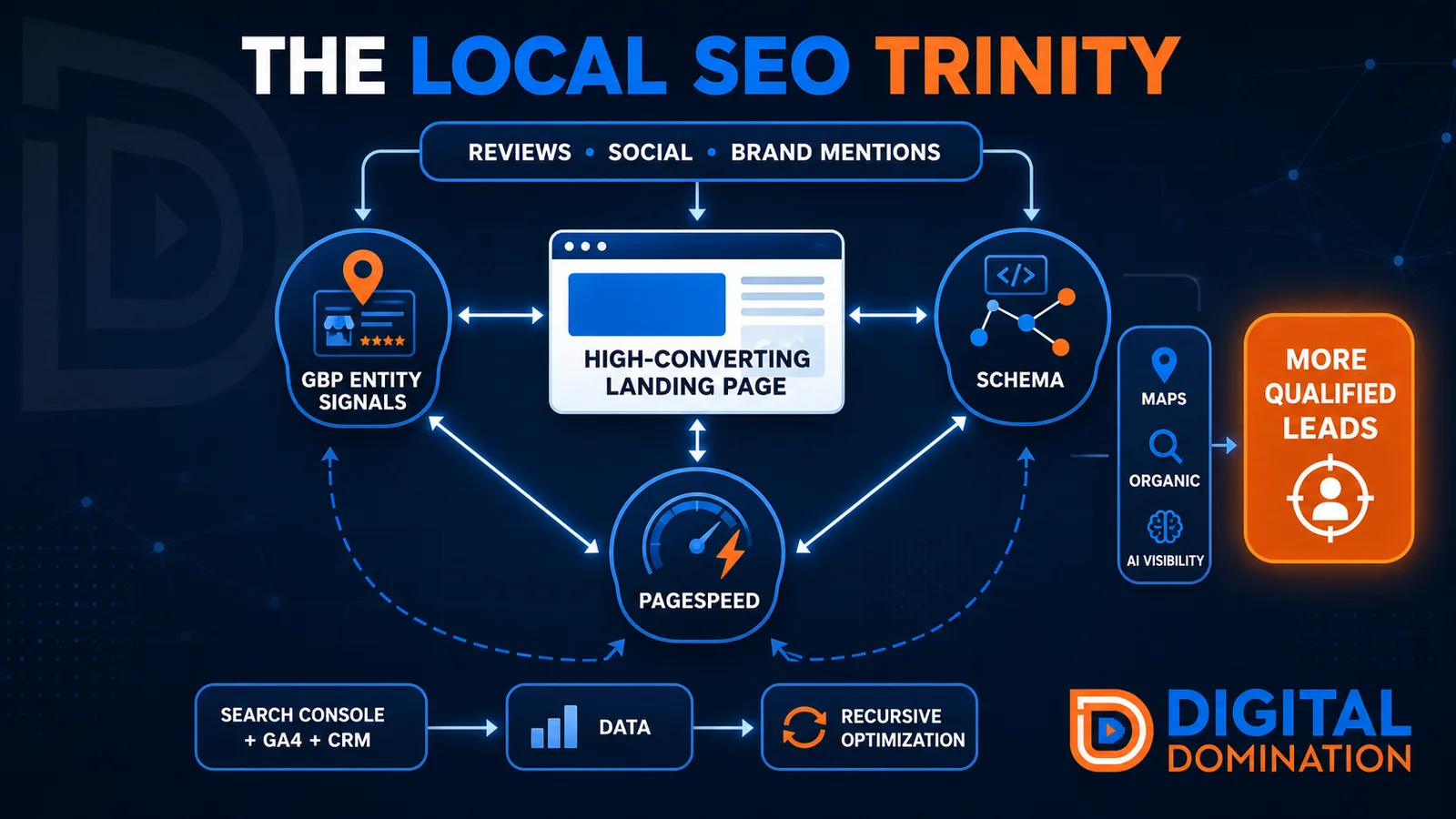
The Local SEO Trinity
Think of a three-legged stool. Your Google profile, your website, and your reviews all have to hold you up. If one leg is short, the whole thing wobbles.
GBP entity signals
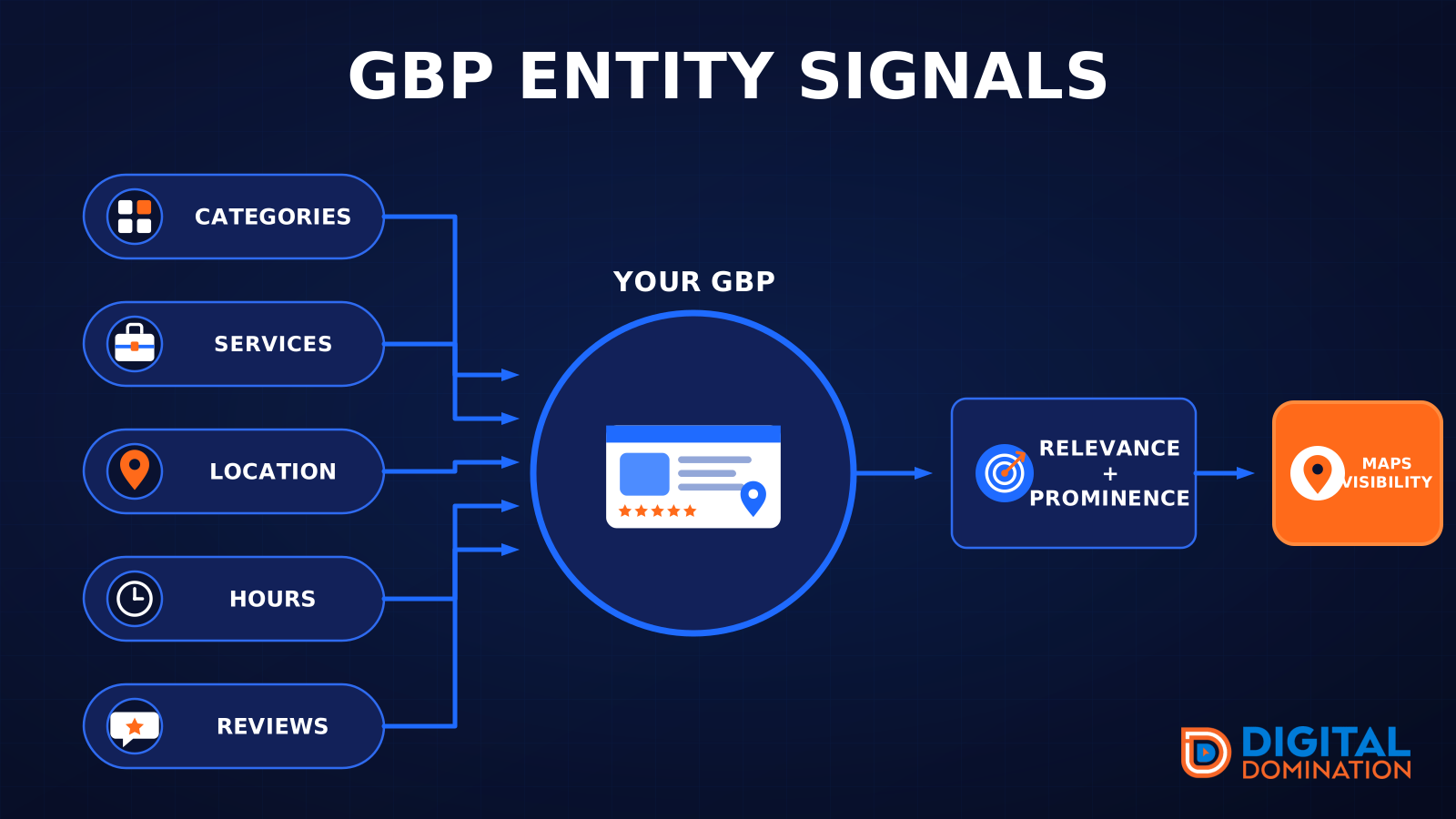
This leg is your Google Business Profile. GBP means Google Business Profile. It covers your categories, your services, your location, your hours, and your reviews. Google uses those facts to decide who to show.
Your Google profile is your storefront sign. If the sign is missing, or it names the wrong shop, people drive past.
PageSpeed to conversion
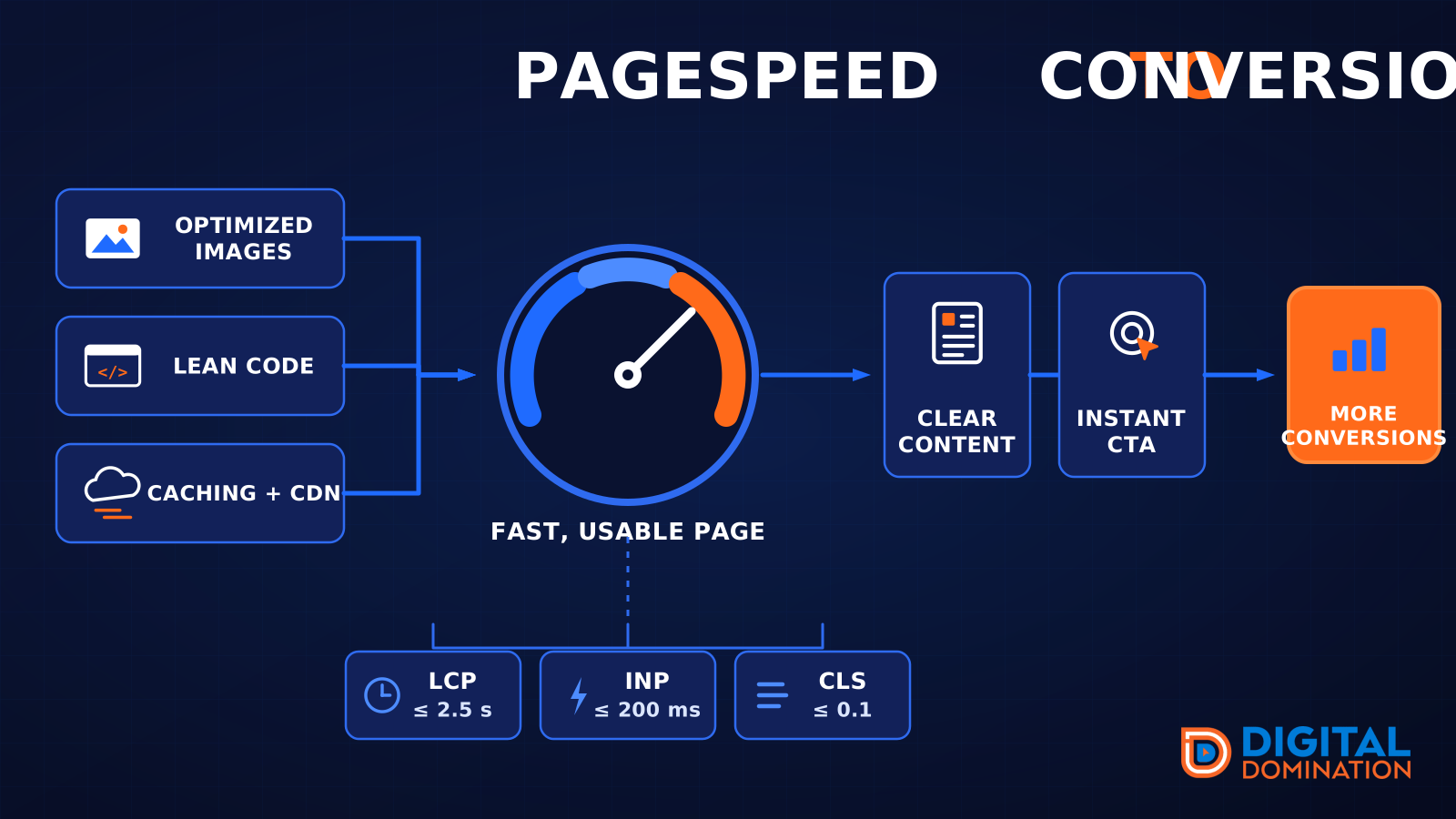
This leg is your website, above all on a phone. Small images, lean code, and caching make a page fast. A fast, clear page is what turns a visit into a call. Phone speed is one of the 12 Trinity checks because a slow page loses the call before anyone sees your offer.
Your website is the showroom. If the door sticks, people leave before they look around.
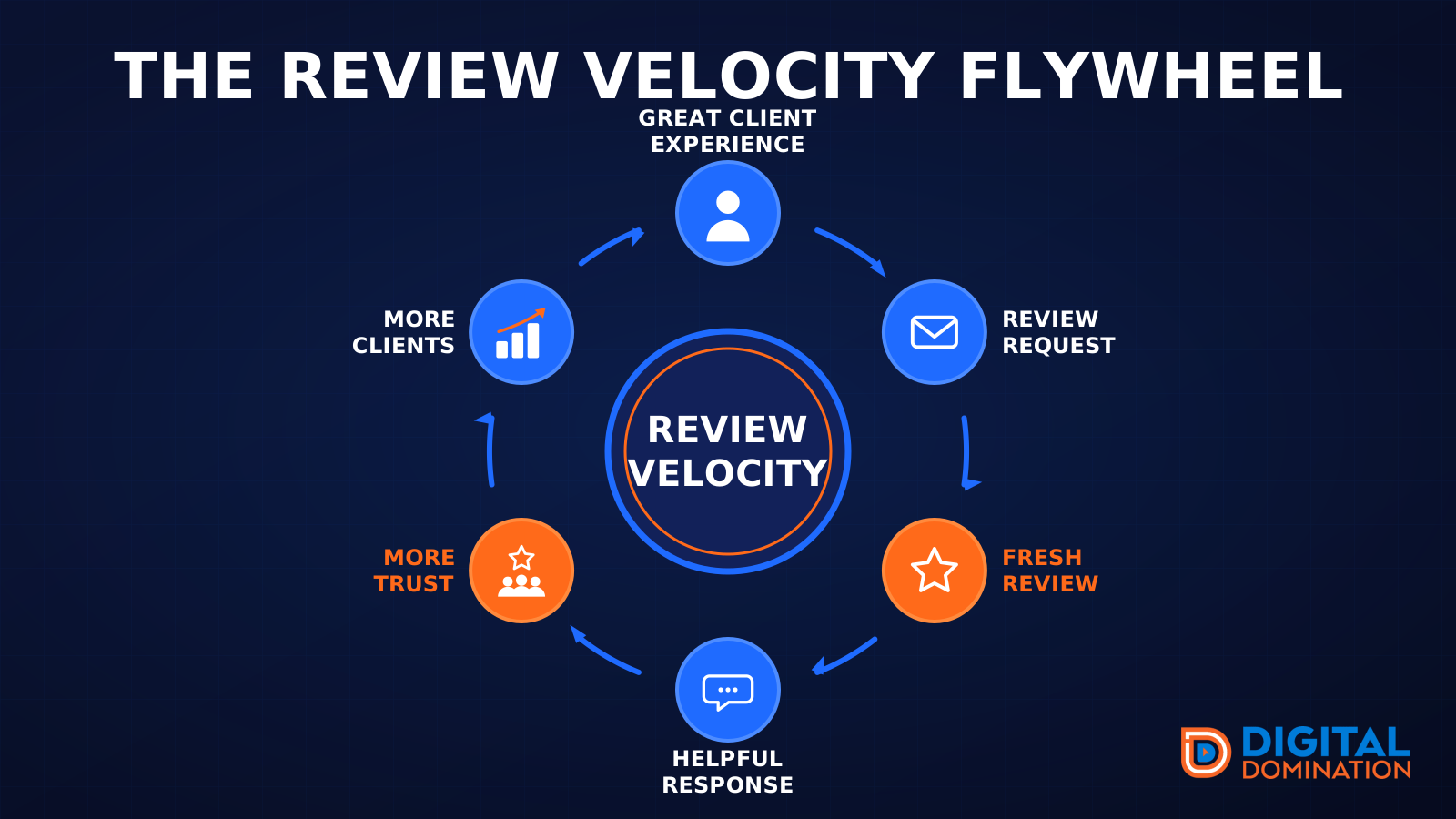
The review velocity flywheel
This leg is reviews and reputation. A good visit leads to a review request, then a fresh review, then a helpful reply, then more trust, then more customers. When the scan can find your Google listing, it shows your rating, your recent reviews, and how many you answered.
Reviews are word of mouth. One kind word helps. A steady stream of real reviews, and a reply from you, helps more.
How this turns into revenue
Being found in more searches leads to more calls. More calls lead to more booked jobs. More booked jobs lead to more revenue.
Example numbers, not a real business: 40 calls from search in a month, a 25 percent close rate, and a $400 average job. That is 10 booked jobs. That is $4,000. The math is the lesson. It is not a promise.
The full page has a box where you can type your own average job value and close rate.
One real story, from our car dealership case study: Medina Auto Group went from invisible on Google Maps to dominating every high-intent search across their market. The turnaround spanned all four of their rooftops at once. The same page says the team eliminated 89 unfair one-star reviews that had been dragging the dealership's reputation down and keeping it out of the Map Pack. It also says: “Results described here are exceptional and non-typical. Outcomes vary based on market conditions, competition, and implementation. No guarantees are made regarding earnings, rankings, or conversions.”
Free strategy call
More booked jobs start with a clear plan
Book a free strategy call. We look at your Google profile, your website, and your reviews, and we tell you what to fix first.
Free. You pick the time. A real person shows up.