
Google Maps optimization services vs hiring an in-house marketer
A practical comparison for local business owners who want more trackable calls from Google Business Profile without wasting management time.
The short answer
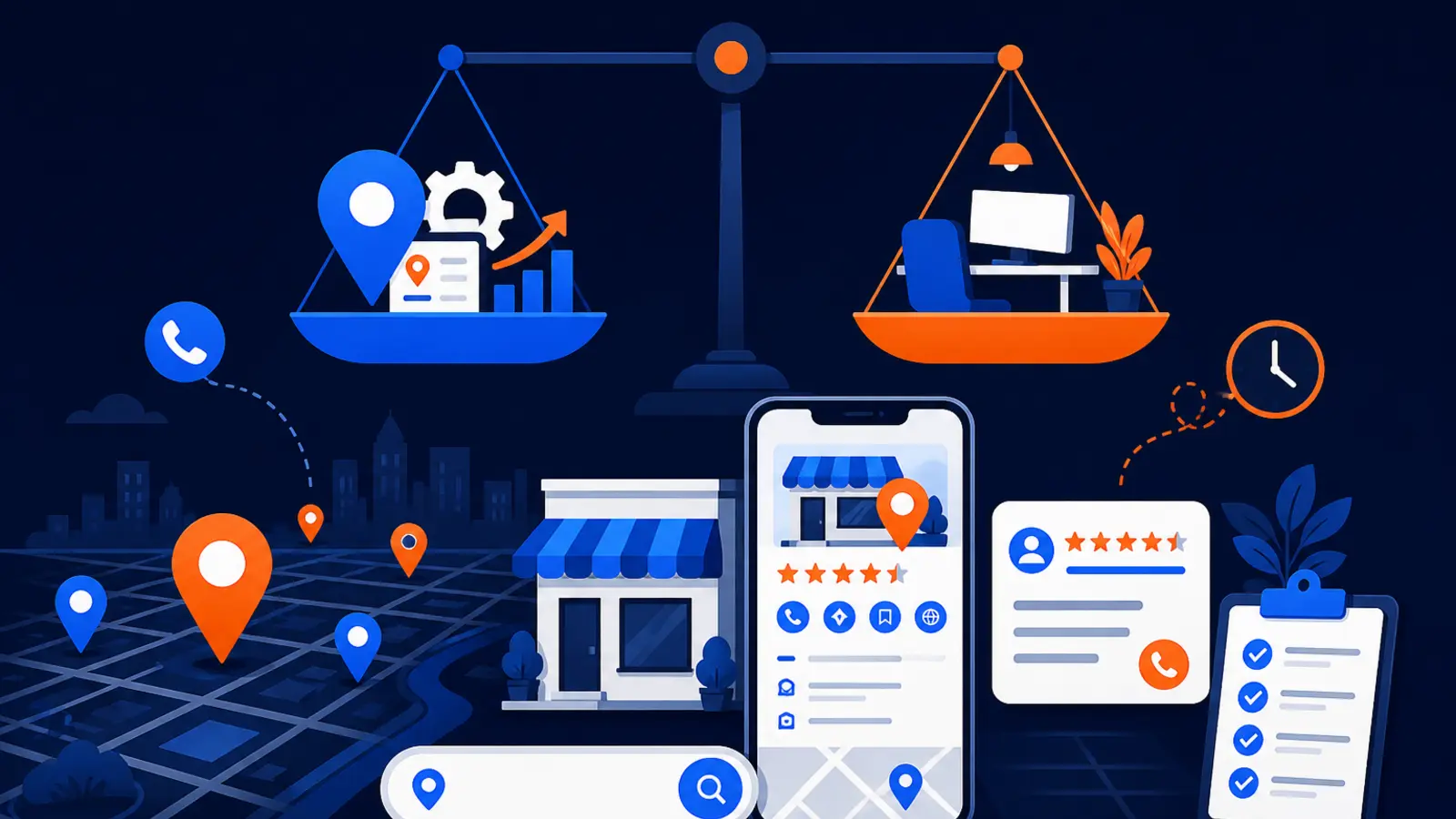
If the goal is more trackable calls from Google Business Profile, a specialist Google Maps optimization service is usually the better fit than hiring a full-time in-house marketer for the same management attention. The reason is focus. Google Maps performance depends on profile completeness, category choices, reviews, proximity, prominence, tracking, and repeated local search testing. A specialist service should spend most of its energy on that exact channel.
An in-house marketer can be the better choice when the business needs someone embedded every day across brand work, events, social media, email, website updates, customer communication, vendor coordination, photos, promotions, and local SEO follow-through. That person may help Google Business Profile, but Maps will be one item on a broad task list.
Google Business Profile Help says a business can use its Business Profile to improve local ranking in Google Maps and Google Search. Google also says there is no way to request or pay for a better local ranking. That means the decision is not about buying rankings from Google. It is about choosing the person or team most likely to improve the signals that Google says matter and make the calls easier to track.
What each option is really built to do
A Google Maps optimization service is built around one main job: improve visibility and conversion from Google Business Profile and the local pack. The work should include profile cleanup, category review, service and location relevance, review process support, posting or update cadence where appropriate, photo guidance, tracking, and ranking visibility across the service area.
An in-house marketer is built around broader company support. That can be valuable. A coordinator can help the owner get campaigns out the door, keep social accounts active, update the website, follow up with customers, coordinate events, gather photos, and make sure vendors have what they need.
The practical difference is specialization versus coverage. A business should choose based on the job it needs most right now:
- ▸Choose a Google Maps optimization service if missed calls from Google are the clearest growth problem.
- ▸Choose an in-house marketer if daily internal marketing execution is the bigger bottleneck.
- ▸Choose both only when the budget and management capacity can support both roles without blurring accountability.
- ▸Do not expect either option to buy a better Google ranking, because Google Business Profile Help says that is not possible.
Why Google Maps calls are a specialist problem
Google Business Profile Help says local results are mainly based on relevance, distance, and prominence. Relevance is how well a profile matches the search. Distance is how close the business or service area appears to be to the searcher. Prominence reflects how well known the business appears to be, including signals such as reviews and other information Google can understand.
Those three ideas sound simple, but the day-to-day work is detailed. If the wrong primary category is selected, the profile can struggle for the best searches. If services, hours, photos, and business information are thin or inconsistent, Google has less complete information to match against customer searches. If reviews are stale or weak, the profile may not convert well even when it appears.
Whitespark’s Local Search Ranking Factors report surveyed 47 local search experts who scored 187 factors across local pack and Maps ranking impact, local organic ranking impact, conversion impact, and AI search visibility impact. In its 2026 local pack and Maps factor list, Primary GBP Category ranked first, Proximity of Address to the Point of Search ranked second, and Keywords in GBP Business Title ranked third. That does not mean a business should stuff keywords into its name. It means the core profile setup and location context matter a lot.
For an owner, the important point is simple: Maps is not just posting updates once in a while. It is a channel with its own rules, constraints, and tracking needs.
Where an in-house marketer can win
An in-house marketer can be the right hire when the owner needs a responsive internal person more than a channel specialist. Many local businesses have messy daily marketing needs that no outside vendor can fully see. A coordinator who sits close to the team can capture real photos, notice seasonal opportunities, hear customer objections, update staff bios, and help the owner keep promises made across different channels.
The U.S. Bureau of Labor Statistics reported a May 2025 median annual wage of $78,760 for market research analysts and marketing specialists, and it says most market research analysts work full time during regular business hours. Wage data is not the full cost of hiring, but it helps owners understand that an employee is a serious budget and management commitment.
An in-house marketer is especially useful when the role includes many daily tasks, such as:
- ▸Writing and sending customer emails.
- ▸Managing social posts and comments.
- ▸Coordinating community events or sponsorships.
- ▸Updating website pages, staff pages, and promotions.
- ▸Collecting photos and videos from the team.
- ▸Helping front desk or dispatch staff with customer communication.
- ▸Keeping outside vendors on schedule.
- ▸Following through on local SEO tasks that require internal access.
The budget question owners should ask
The fair budget question is not only salary versus vendor fee. It is what the business gets for the same management attention. An employee needs hiring, onboarding, software access, direction, review, and backup. A specialist service needs access, approvals, business details, and accountability check-ins. Both require the owner’s time.
For Google Business Profile call growth, the risk with an in-house generalist is dilution. The person may be capable, but they may spend the week on social posts, flyers, event logistics, website edits, and customer emails before touching Maps. The risk with a specialist service is narrowness. If the business needs all-around marketing support, a Maps-only program will not replace an internal coordinator.
A useful way to compare the two is to assign the budget to outcomes, not activity. If the key outcome is trackable Google Business Profile calls, the specialist should be judged against that. If the key outcome is smoother daily marketing operations, the in-house hire should be judged against that.
What to look for before you choose
Before signing with a Google Maps optimization service or hiring an in-house marketer, ask for checkpoints you can verify. A credible option should make the work visible enough that you are not guessing. Google Business Profile performance data can include interactions, website clicks, calls, directions, messages, bookings, and menu clicks when linked with Google Analytics, according to Google Business Profile Help.
Also remember that some Google changes are not instant. Google Business Profile Help says verification reviews take up to 5 business days after verification steps are completed. It also says Business Profile edits usually take up to 10 minutes to review but can take up to 30 days. A good provider or employee should set expectations around those review windows instead of promising instant control.
Use these checkpoints to compare the options:
- ▸A current audit of the Business Profile before work starts.
- ▸A clear list of profile fields that will be checked and improved.
- ▸A review request process that follows Google’s rules.
- ▸Call tracking or reporting tied to Google Business Profile activity.
- ▸Local ranking visibility across the real service area, not only one office address.
- ▸A plan for categories, services, photos, hours, and business details.
- ▸A simple reporting cadence the owner can actually read.
- ▸Clear responsibility for approvals, customer review requests, and business updates.
Seven questions to ask before you sign
The fastest way to avoid a bad fit is to ask practical questions before money changes hands. These questions work for both a specialist service and an in-house marketing hire, but the answers should sound different depending on the role.
Ask these questions in plain language:
- ▸What specific work will you do to improve Google Business Profile calls?
- ▸How will I know whether calls came from Google Business Profile?
- ▸What profile changes will need my approval?
- ▸How do you handle reviews without offering incentives?
- ▸How do you check rankings outside our office location?
- ▸What reports will I see each week or each month?
- ▸What work is not included in this role or service?
Reviews affect both ranking and conversion
Reviews are one of the clearest areas where Maps visibility and customer trust meet. Google Business Profile Help says more reviews and positive ratings can help a business’s local ranking. Google also allows businesses to ask customers for reviews through a Google link or QR code, but offering incentives for reviews is prohibited.
Whitespark’s 2026 local pack and Maps factor list ranked Quantity of Native Google Reviews with text ninth and Recency of Reviews eleventh. BrightLocal’s Local Consumer Review Survey 2026 says 97% of consumers read reviews for local businesses, and 41% always read reviews when browsing for businesses. BrightLocal also says 85% of consumers are more likely to use a business after reading positive reviews, while 77% are deterred by negative reviews.
This is where an in-house marketer and a Maps specialist can both help, but in different ways. The in-house marketer may be closer to the team and better able to remind staff to ask happy customers. The specialist may be better at building a compliant process, measuring review growth, and tying review activity to Maps performance.
A review process should include:
- ▸A simple way to ask real customers for reviews.
- ▸No discounts, gifts, or incentives for reviews.
- ▸A Google review link or QR code customers can use easily.
- ▸Staff training so requests happen at the right moment.
- ▸Owner visibility into new reviews and review responses.
- ▸A plan to keep review requests consistent over time.
Tracking calls is where many comparisons fall apart
A business owner does not need perfect attribution to make a better decision, but the tracking has to be honest. If the goal is more calls from Google Business Profile, then reports should separate Business Profile performance from website traffic, social clicks, and paid ads as much as the available tools allow.
Google Business Profile Help says performance data can include calls and other customer actions. That makes it possible to watch whether profile activity is moving in the right direction. It does not mean every phone call can be perfectly explained, especially if customers call from saved numbers, ads, referrals, or repeat visits.
For a fair comparison, decide in advance what will count as progress. A specialist service should be able to show local ranking movement, profile activity, and call trends. An in-house marketer should be able to show completed tasks, publishing consistency, customer communication improvements, and any Google Business Profile actions they own.
A practical call tracking setup should answer:
- ▸Are Google Business Profile calls being watched separately from other channels?
- ▸Are rankings checked in more than one point in the service area?
- ▸Are reports showing actions, not just impressions?
- ▸Are missed calls and call handling issues being discussed?
- ▸Are changes tied to dates so the owner can see what happened when?
When the specialist service is the better fit
A Google Maps optimization service is the stronger choice when the owner wants a focused program aimed at Google Business Profile calls and local pack visibility. This is especially true for service businesses that already have someone handling phones, scheduling, operations, and basic customer communication, but do not have a disciplined Maps process.
It is also the better fit when the owner wants outside expertise without managing a full-time employee. A specialist should bring a repeatable system, not a random task list. The owner still needs to provide accurate business details, approvals, photos when needed, and honest feedback from the phones.
Choose the specialist path when these statements are true:
- ▸Google is already an important source of leads or calls.
- ▸The business wants more calls from Maps, not just more marketing activity.
- ▸The owner does not have time to train a generalist on local SEO.
- ▸The business needs local ranking reports across its service area.
- ▸Reviews, categories, profile completeness, and call tracking need structure.
- ▸The website and basic operations are good enough to support more inbound demand.
When hiring in-house is the better fit
Hiring in-house is the better choice when the business has broad, daily marketing needs that require someone close to the team. If the owner is constantly stuck writing emails, planning promotions, chasing staff photos, updating the site, answering customer messages, and coordinating vendors, a specialist Google Maps service will not solve the whole problem.
An in-house marketer also makes sense when the brand has many moving parts. Restaurants, retailers, event-heavy businesses, multi-service companies, and businesses with frequent promotions may need daily coordination more than a Maps-only push. That employee can still support Google Business Profile, but Maps should be only one clearly assigned responsibility.
Choose the in-house path when these statements are true:
- ▸The owner needs daily help across many marketing tasks.
- ▸The business has frequent events, offers, announcements, or content needs.
- ▸Customer communication and follow-up are part of the marketing problem.
- ▸The team needs someone physically or operationally close to the business.
- ▸The owner is ready to manage, train, and review a full-time employee.
- ▸Google Maps matters, but it is not the only urgent channel.
How Digital Domination approaches Google Maps optimization
Digital Domination’s Google Maps work is built for owners who want trackable calls and visible proof from Google Business Profile. The process starts with a free 169-point GeoGrid scan that checks 169 real Google results across the service area. That matters because a business can rank differently across town, not just at its office address.
Digital Domination offers territory exclusivity, one client per trade per service area. The company also provides weekly GeoGrid tracking reports with visual proof of rankings and call volume. Pricing for the Maps Domination Program is set per market on a qualification call and tied to the ranking outcome. The guarantee is: top 3 in the Google Map Pack in 12 weeks or you do not pay.
Digital Domination is based in Las Vegas, NV and has a 4.9 Google rating from 35 reviews. Founders Nick Thompson and Dan Dirksen built the company around 20 years learning how businesses earn attention, authority, trust and rankings online.
The bottom line
If you mainly need more trackable calls from Google Business Profile, compare providers and hires around Maps visibility, call reporting, review process, and local ranking proof. A specialist Google Maps optimization service is usually the cleaner fit for that outcome because the work is narrower and easier to hold accountable.
If you need daily embedded help across brand, events, social, email, website updates, customer communication, and vendor follow-through, hire an in-house marketer or marketing coordinator. That role can support local SEO, but it should not be judged as if it were a dedicated Google Maps program.
To see how a specialist program is structured, visit Digital Domination’s Google Maps optimization services page. It explains the Maps Domination Program, how the work is tracked, and what type of local business it fits. You can also request the free GeoGrid scan on the scan page to see how your business appears across 169 real Google results before deciding.
Keep reading
Related guides
- ▸The Maps Domination Program vs doing local SEO yourself
- ▸The Maps Domination Program Vs Hiring An In House Marketer Or Marketin
- ▸The real timeline to top 3 in the Google Map Pack
Put it into action
Frequently Asked Questions
Is a Google Maps optimization service better than hiring a marketer?
It is usually better if your main goal is more trackable calls from Google Business Profile. A marketer may be better if you need daily help across social, email, events, website updates, and customer communication.
Can I pay Google for a better Maps ranking?
No. Google Business Profile Help says there is no way to request or pay for a better local ranking on Google. You can work on the signals Google says matter, including relevance, distance, prominence, complete profile information, and reviews.
What should an in-house marketer do for Google Business Profile?
They should keep business details accurate, gather photos, help request reviews within Google’s rules, publish updates when appropriate, and watch performance data. If they are also handling many other tasks, give them a clear checklist so Maps work does not get pushed aside.
How do I know if Google Business Profile is producing calls?
Google Business Profile performance data can include calls and other actions, according to Google Business Profile Help. You can also compare profile activity, ranking reports, and call trends over time to see whether work on the profile is connected to more demand.
Do reviews really matter for local calls?
Yes. Google Business Profile Help says more reviews and positive ratings can help local ranking. BrightLocal’s Local Consumer Review Survey 2026 also says most consumers read reviews for local businesses, and positive or negative reviews can affect whether they choose a business.
How long do Google Business Profile changes take?
Google Business Profile Help says many edits are reviewed in up to 10 minutes, but some can take up to 30 days. Verification reviews can take up to 5 business days after the verification steps are completed.
When should I hire in-house instead of using a Maps service?
Hire in-house when you need someone embedded in the business every day. That is the better fit for brand coordination, events, social media, email, website updates, customer communication, and making sure internal marketing tasks actually happen.
What should I ask a Google Maps optimization company before signing?
Ask how they track calls, how they measure rankings across your service area, what profile work they will do, and how they handle reviews without incentives. Also ask what is not included so you do not mistake a Maps program for a full marketing department.
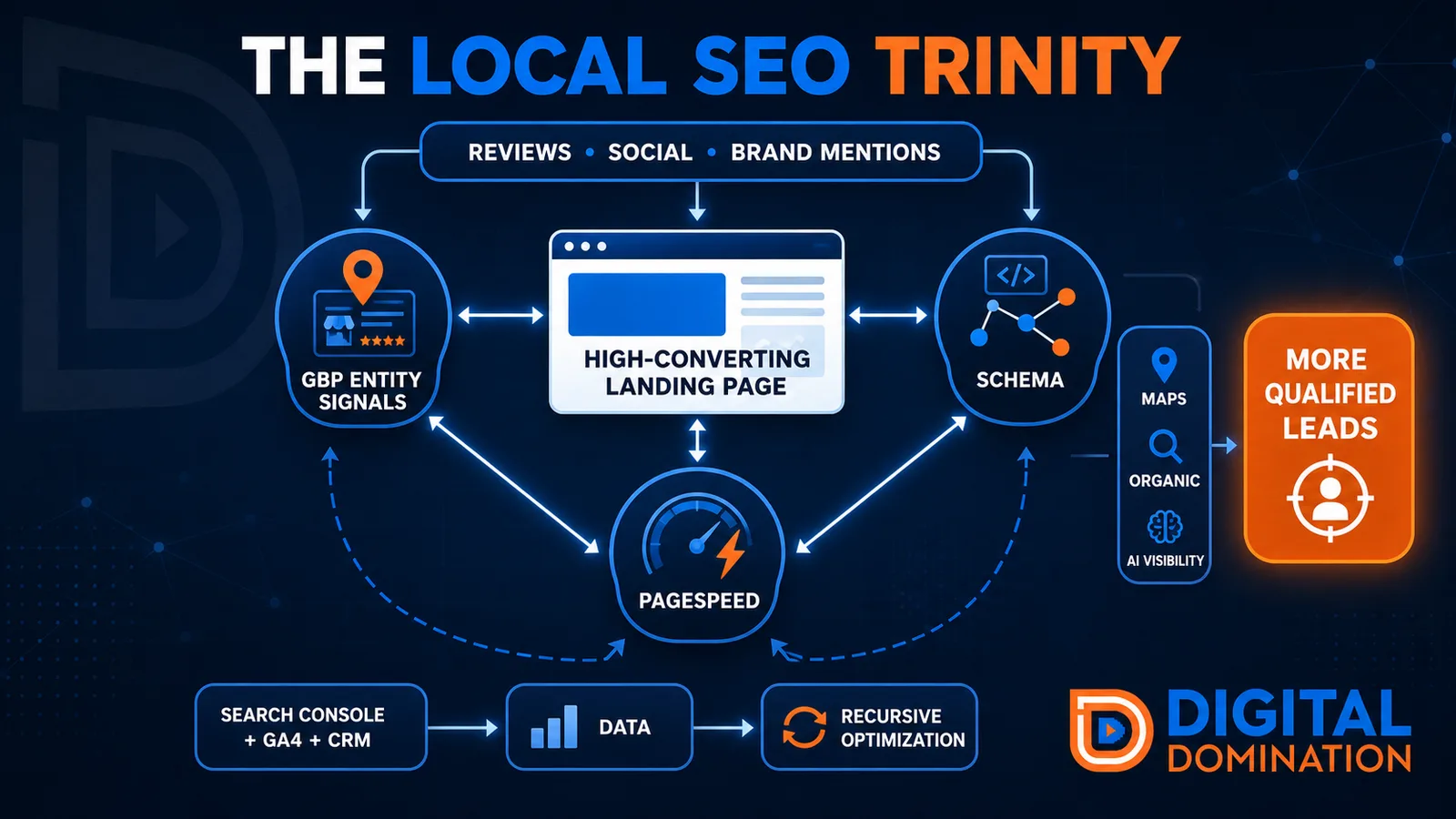
The Local SEO Trinity
Think of a three-legged stool. Your Google profile, your website, and your reviews all have to hold you up. If one leg is short, the whole thing wobbles.
GBP entity signals
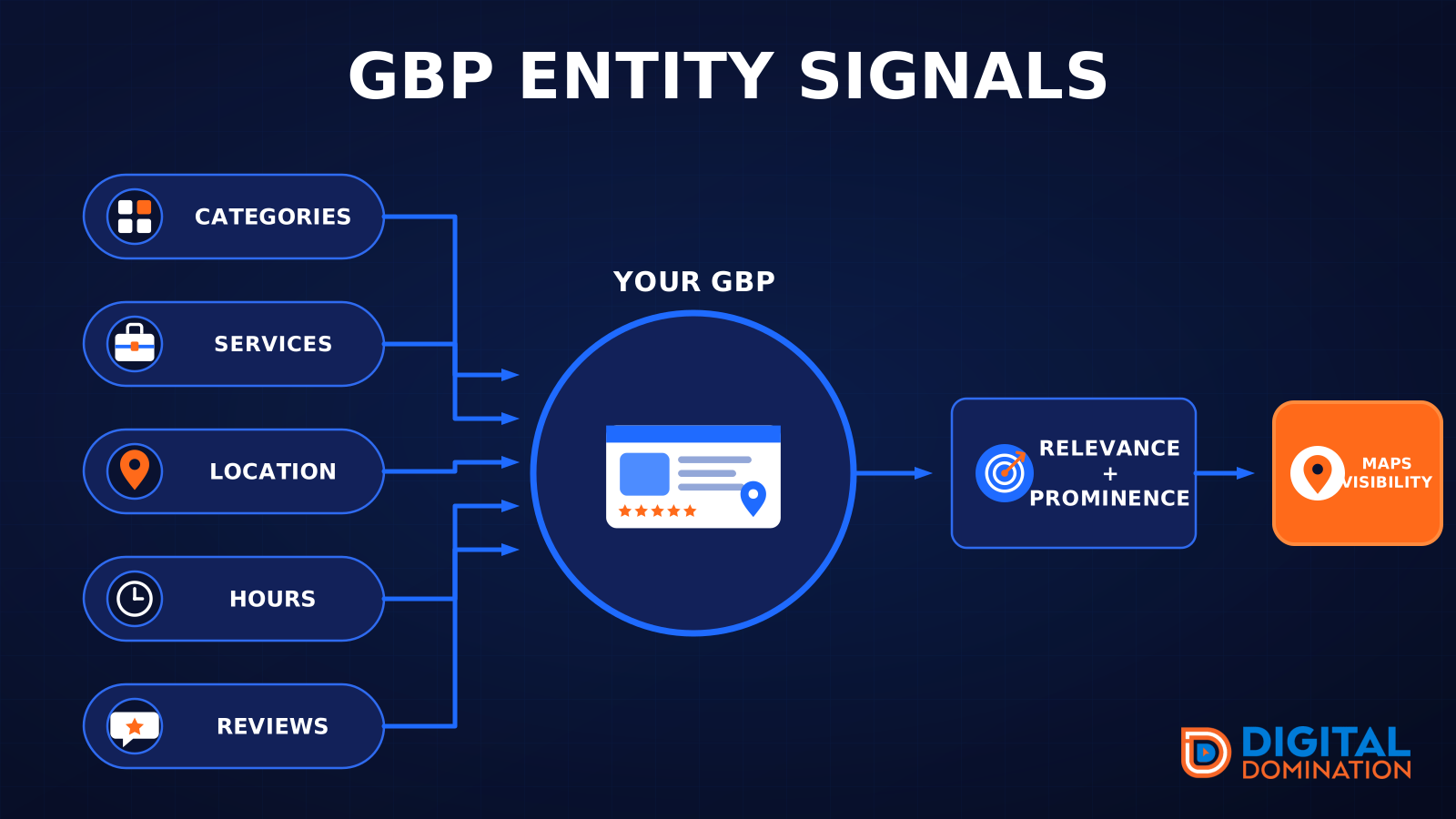
This leg is your Google Business Profile. GBP means Google Business Profile. It covers your categories, your services, your location, your hours, and your reviews. Google uses those facts to decide who to show.
Your Google profile is your storefront sign. If the sign is missing, or it names the wrong shop, people drive past.
PageSpeed to conversion
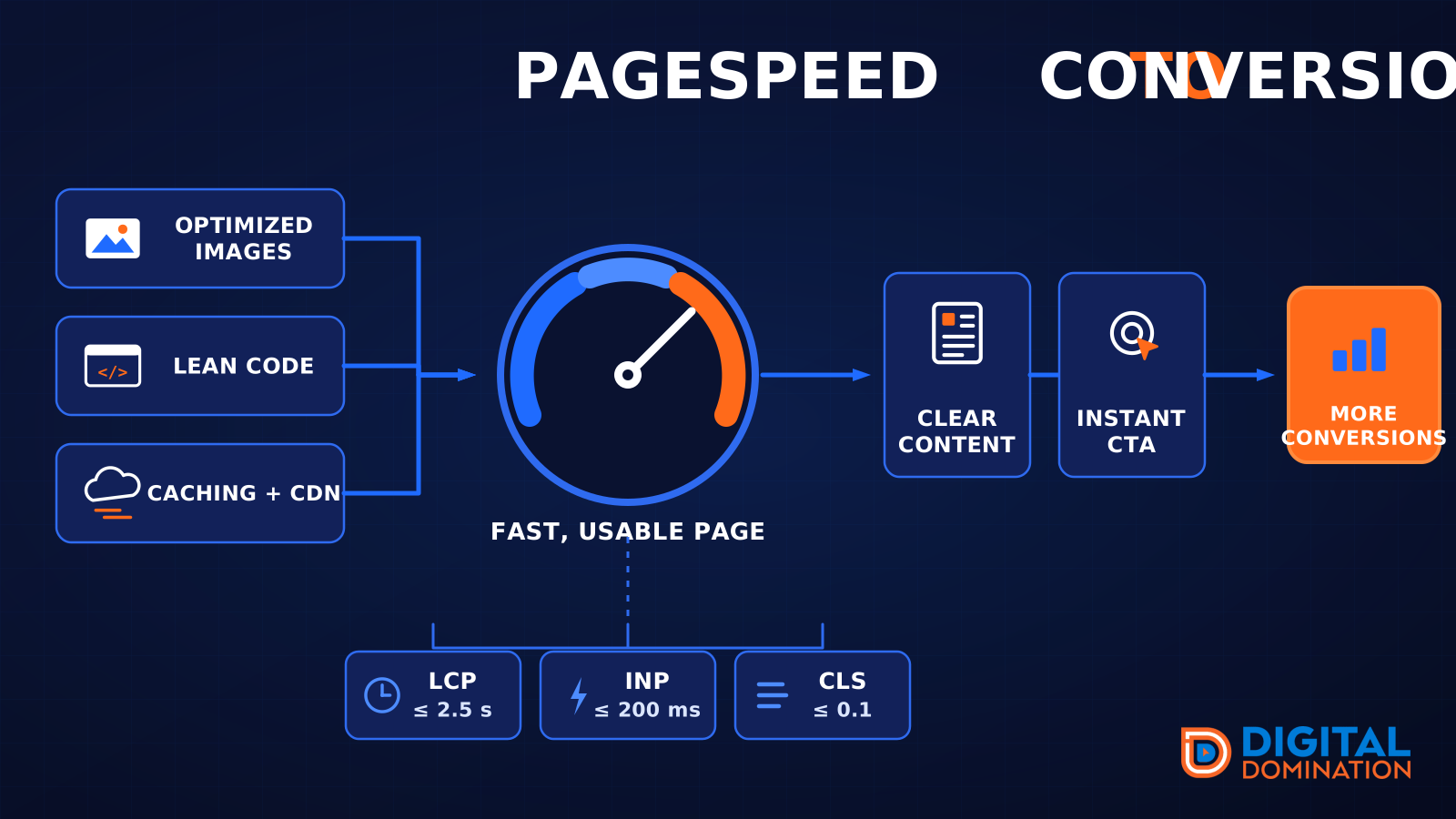
This leg is your website, above all on a phone. Small images, lean code, and caching make a page fast. A fast, clear page is what turns a visit into a call. Phone speed is one of the 12 Trinity checks because a slow page loses the call before anyone sees your offer.
Your website is the showroom. If the door sticks, people leave before they look around.
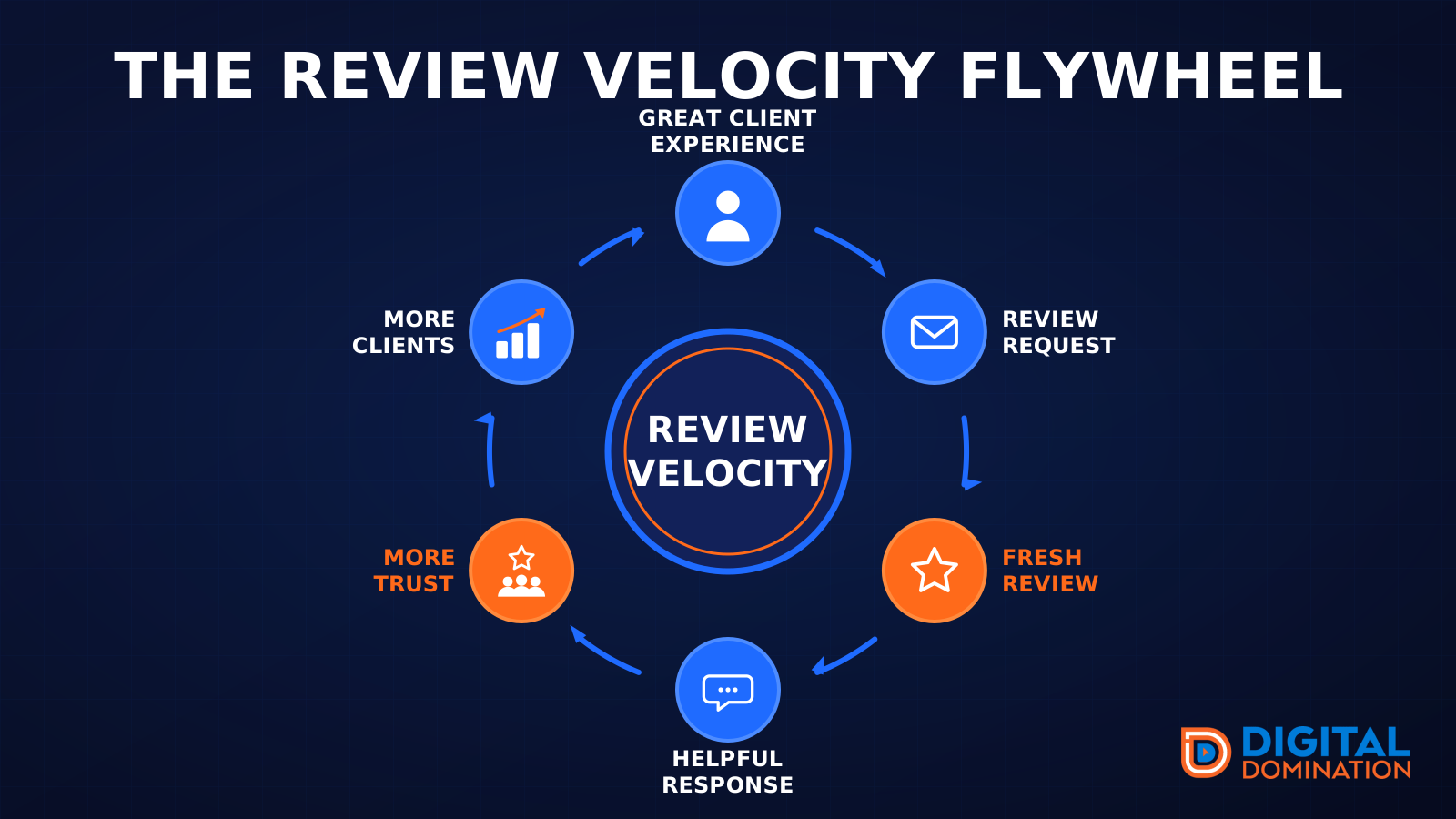
The review velocity flywheel
This leg is reviews and reputation. A good visit leads to a review request, then a fresh review, then a helpful reply, then more trust, then more customers. When the scan can find your Google listing, it shows your rating, your recent reviews, and how many you answered.
Reviews are word of mouth. One kind word helps. A steady stream of real reviews, and a reply from you, helps more.
How this turns into revenue
Being found in more searches leads to more calls. More calls lead to more booked jobs. More booked jobs lead to more revenue.
Example numbers, not a real business: 40 calls from search in a month, a 25 percent close rate, and a $400 average job. That is 10 booked jobs. That is $4,000. The math is the lesson. It is not a promise.
The full page has a box where you can type your own average job value and close rate.
One real story, from our car dealership case study: Medina Auto Group went from invisible on Google Maps to dominating every high-intent search across their market. The turnaround spanned all four of their rooftops at once. The same page says the team eliminated 89 unfair one-star reviews that had been dragging the dealership's reputation down and keeping it out of the Map Pack. It also says: “Results described here are exceptional and non-typical. Outcomes vary based on market conditions, competition, and implementation. No guarantees are made regarding earnings, rankings, or conversions.”
Free strategy call
More booked jobs start with a clear plan
Book a free strategy call. We look at your Google profile, your website, and your reviews, and we tell you what to fix first.
Free. You pick the time. A real person shows up.